
 0086-20-3156-0779
0086-20-3156-0779
0086-20-3156-0779


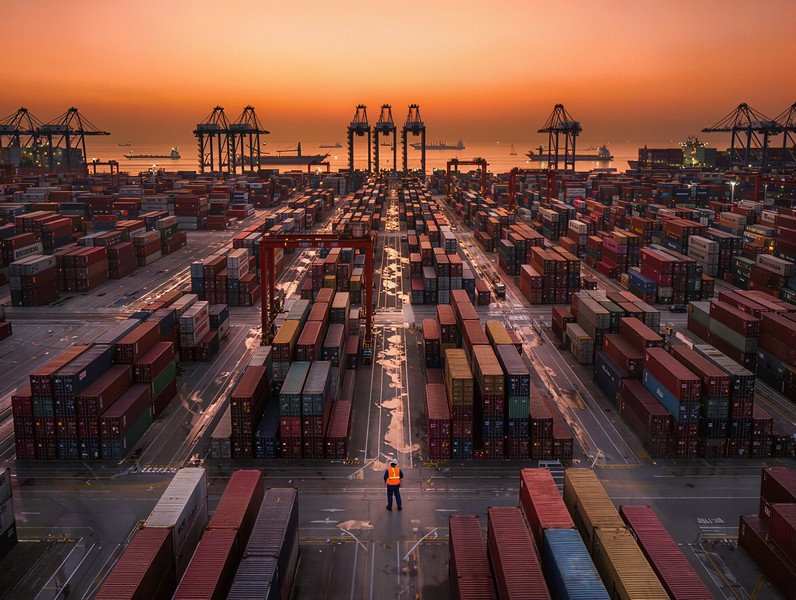
In late May, a senior AI researcher at one of China's largest tech firms received a memo that effectively rewrote the terms of his career. An overseas conference he had been planning to attend in San Francisco was no longer possible. A sabbatical project with a European university — already approved by his department head — was blocked. His passport, he learned, would now require government clearance before any outbound travel.
He is not alone.
China's State Council published a sweeping new regulatory framework on June 1, 2026, tightening control over overseas deals involving Chinese investors, technology, data, and national security — just weeks after Beijing ordered Meta to unwind its acquisition of the AI startup Manus. The new rules, which take effect July 1, specifically ban cross-border talent transfers in sensitive sectors without government approval. The directive targets semiconductor design, artificial intelligence, quantum computing, aerospace, and advanced materials — exactly the fields where global companies have been competing hardest for executive talent.
For executive search firms operating across the Asia-Pacific corridor, the implications are immediate and structural.

The Three-Vector Pressure on Global Supply Chain Leadership
The supply chain talent market in 2026 is already under strain from forces that have nothing to do with regulation. ManpowerGroup's 2026 Talent Shortage Survey, covering 39,000 employers across 41 countries, found that 72% of employers report difficulty filling roles. AI-related capabilities have overtaken traditional engineering and IT skills as the hardest-to-find qualification globally.
Henderson Executive Search has tracked 72 executive leadership appointments across supply chain, procurement, and operations globally in Q1 2026 alone — an 85% year-over-year increase. Demand for chief supply chain officers who can navigate both digital transformation and geopolitical turbulence has never been higher.
Now add a third vector: governments are actively locking down the talent pool.
"It used to be a game of finding the right person and moving them across borders," said a partner at Henderson Executive Search who focuses on supply chain and technology placements in the Asia-Pacific region. "Now we have to ask: can this person actually leave their country? Will the receiving country issue a visa in this political climate? Those questions used to be procedural. In 2026, they're strategic."

China's Talent Containment Strategy
The June 1 framework represents the most comprehensive attempt by Beijing to control technology outflows since the U.S.-China trade war escalated in 2018. It formalizes the government's authority to force the unwinding of completed overseas transactions — including talent moves that are structured as service agreements or secondments.
The directive builds on a series of escalating measures. On May 26, Bloomberg reported that China had extended mandatory pre-travel government approval to private-sector AI researchers at DeepSeek, Alibaba Group, and other strategically important companies. Previously, such restrictions applied mainly to state-owned enterprises and military-affiliated research institutes.
Taiwan, meanwhile, announced in March that it was investigating 11 Chinese firms for allegedly poaching semiconductor and high-tech talent — part of a broader effort to curb intellectual property leakage. The island's Ministry of Economic Affairs said the firms used shell companies and recruitment agents to bypass visa scrutiny, a pattern that regulators across the region are now watching for.
The thread connecting these moves is consistent: retaining strategic talent inside national borders is no longer a back-office concern — it is a national security priority.

What This Means for Cross-Border Executive Search
For multinational corporations building supply chain and AI leadership teams, the new restrictions create a structural talent gap that cannot be filled by throwing money at the problem.
Consider the profile Henderson Executive Search's consultants encounter most frequently: a candidate who has spent 12–15 years in supply chain operations at a Shanghai-based multinational, with dual expertise in logistics optimization and AI-driven demand forecasting. Six months ago, that candidate was a viable option for a chief supply chain officer role in Singapore, Dubai, or London. Today, if that candidate works in a classified sector, the approval process alone could take four to six months — with no guarantee of clearance.
The global AI talent numbers compound the problem. Across all sectors, companies have posted over 1.6 million AI-related roles worldwide in 2026, with only 518,000 qualified candidates available to fill them — a supply-demand ratio of roughly 3.2 to 1, according to industry estimates cited by TopExecRecruiting. In supply chain AI specifically, the ratio is steeper. Fewer than 15% of supply chain executives globally possess what Henderson Executive Search classifies as "advanced AI literacy" — the ability to design, deploy, and govern machine learning models within logistics and procurement workflows.
This is not simply a shortage of engineers. It is a shortage of leaders who speak both supply chain and AI fluently.

Rerouting the Talent Pipeline
The market is already adapting, though not without friction.
Some multinationals are shifting their hiring strategy from "import talent" to "build local." A Fortune 500 logistics firm recently engaged Henderson Executive Search to identify senior supply chain leaders in Vietnam, Thailand, and Indonesia — markets that were previously considered secondary to China-based hiring. The brief was explicit: find candidates who can operate independently of the mainland talent pool.
Others are taking a different approach. Rather than relocating executives, companies are restructuring roles to allow remote leadership of cross-border operations. This works for some functions but falls short where on-the-ground presence is non-negotiable — port operations, factory management, customs compliance.
A third strategy is gaining traction: poaching from competitor supply chains rather than from the technology sector itself. Henderson Executive Search has observed a 40% increase in demand for executives with "crisis-tested" supply chain experience — leaders who managed through the Hormuz Strait disruption in March 2026, when importers across the Gulf scrambled to reroute food, medicine, and factory supplies as the strait effectively closed. These candidates are valued not for their technical certifications but for their demonstrated ability to make decisions under conditions of radical uncertainty.

The New Geography of Executive Talent
The winners in this environment will be organizations that treat talent mobility as a strategic variable, not an HR process.
Henderson Executive Search's analysis suggests three structural shifts are already underway. First, Southeast Asia is emerging as the new battleground for supply chain AI talent — Singapore, Ho Chi Minh City, and Bangkok are seeing the fastest growth in executive-level supply chain postings. Second, the premium on bilingual and bicultural executives has expanded beyond Mandarin-English to include Vietnamese-English and Thai-English fluency. Third, executive search firms themselves are being asked to provide geopolitical risk assessments alongside candidate evaluations — a service line that barely existed three years ago.
"We're effectively becoming intelligence operations for our clients," said the Henderson Executive Search partner. "We track regulatory changes in real time, map which talent corridors are open and which are closing, and advise on compensation structures that account for mobility risk. The old model — find a resume, make a match — is obsolete."

A Reality Check
None of this means China's talent pipeline has shut entirely. The June 1 rules are broad but enforcement is inconsistent — some firms report smooth approvals for non-sensitive roles, while others have had routine transfers blocked without explanation. The ambiguity itself is the point. Companies that try to navigate this landscape without specialist guidance are gambling on outcomes they cannot predict.
The fundamental question for boards and CEOs in 2026 is no longer "where do we find the talent?" It is "how do we build a leadership pipeline that survives the next geopolitical shock?"
For Henderson Executive Search, that question defines the firm's mandate. Whether through identifying crisis-tested supply chain leaders in Southeast Asia, sourcing AI-native executives who can operate across regulatory regimes, or advising clients on the shifting geopolitics of talent mobility, the firm's role has evolved from matchmaker to strategic navigator.
And the researcher who got that memo in May? He is currently evaluating a role at a Singapore-based logistics AI startup — a position he can accept without leaving the region. The global talent market has not stopped moving. It has simply found new routes.



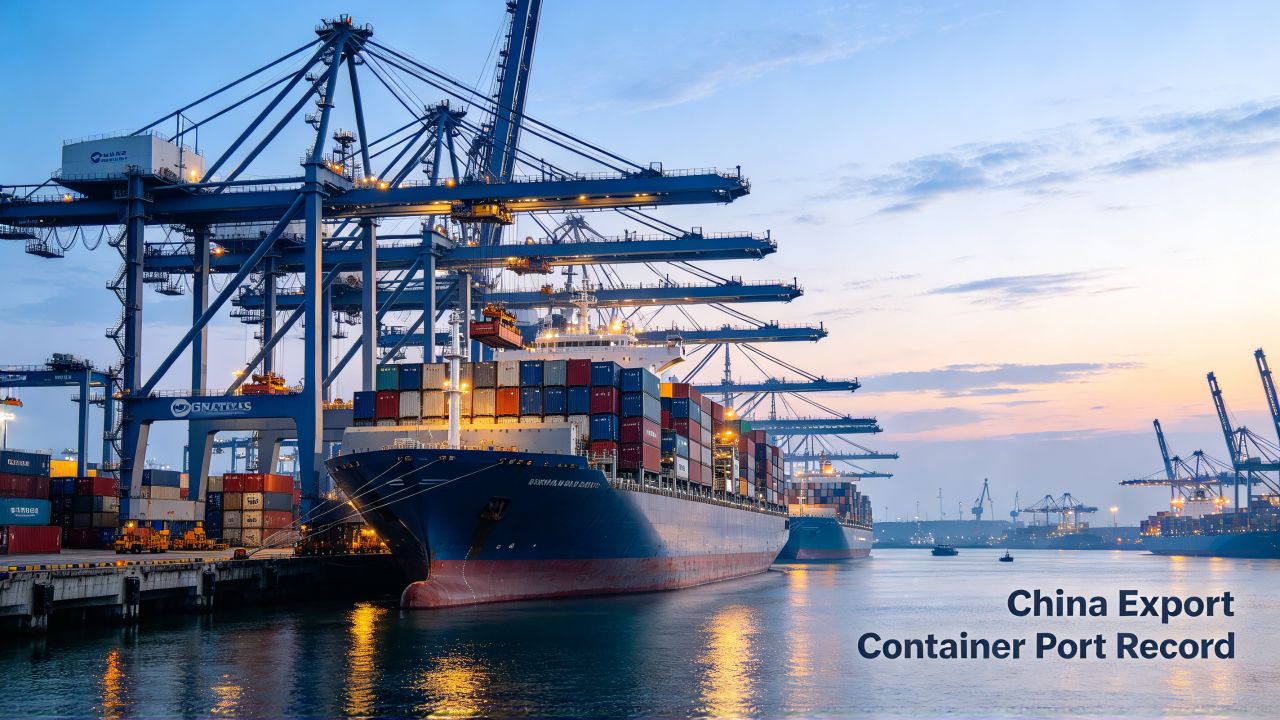



 Why AI Skills Suddenly Became the Deciding Factor in Supply Chain