
 0086-20-3156-0779
0086-20-3156-0779
0086-20-3156-0779



On a Tuesday morning in late April, Amazon stood on stage at an AWS event in Seattle and unveiled Connect Talent — an AI agent designed to hire hundreds of thousands of people. The pitch was seductive: AI-led voice interviews running around the clock, recruiter notes generated automatically, and a new design philosophy called "humorphism" that promised to make AI adapt to human workflows rather than the other way around.
It sounded like the end of recruitment as we knew it.
Maybe it is — for volume hiring. But for the kind of searches that keep supply chain executives awake at night, the picture looks very different.
The numbers tell a contradictory story.
According to ManpowerGroup's 2026 Global Talent Shortage survey, 72 percent of employers across 41 countries report difficulty filling roles. That is the highest figure in the survey's two-decade history. In supply chain and logistics specifically, DSJ Global's Supply Chain Talent Report 2026 found that nearly 60 percent of organizations have been unable to fill senior operations roles for six months or longer.
Here is the irony. The same companies racing to deploy AI agents for mass hiring are simultaneously struggling to find the senior leaders who will actually oversee those AI systems. Amazon's Connect Talent may shorten the recruitment cycle for warehouse managers from weeks to days. But who hires the vice president of global logistics who decides where Connect Talent gets deployed in the first place?
"The market has this weird bifurcation," said a partner at Henderson Executive Search, speaking on background. "Everyone is obsessed with automating entry-level and mid-level hiring, and nobody is paying enough attention to the fact that the executive pipeline for cross-border supply chain roles is bone dry."

Why supply chain executive talent is so hard to find.
The skill set required to run a modern global supply chain has shifted dramatically in the past three years. A candidate who looked strong in 2023 — deep procurement experience, solid contract negotiation skills, familiarity with Southeast Asian manufacturing hubs — is now expected to also understand AI-driven demand forecasting, carbon border adjustment mechanisms, and real-time geopolitical risk assessment across at least three continents.
TechCrunch reported in February 2026 that IBM plans to triple its entry-level hiring in the U.S. this year, but with completely redesigned job functions. The same principle applies at the executive level, except the tolerance for error is zero. A wrong hire for a chief supply chain officer at a multinational retailer can cost upwards of $15 million in disrupted operations, according to data cited by the BrainWorks supply chain management report.

Cross-border complexity is the real bottleneck.
Consider the case of a Chinese electric vehicle battery manufacturer expanding into Hungary and Mexico simultaneously — a real search that Henderson Executive Search handled in late 2025. The ideal candidate needed Mandarin and English fluency, European Union regulatory knowledge, Mexican labor law familiarity, and experience scaling gigafactories from scratch. The search took seven months. Three finalists dropped out during the process. One accepted a counteroffer from his current employer the day before signing.
This is not a problem AI can solve by scanning LinkedIn profiles faster.
OpenAI announced in September 2025 that its Jobs Platform — launching mid-2026 — would use AI to match candidates with businesses in a direct challenge to LinkedIn. Tech investors have poured more than $2.3 billion into AI-powered recruitment startups since 2024, per PitchBook data cited by multiple outlets. The tools are getting better at finding. What they have not gotten better at is closing.
"I have seen AI tools surface excellent candidates that the algorithm would have missed three years ago," said a managing director at Henderson Executive Search. "But the moment that candidate needs to be convinced to leave a stable role in Singapore for a high-risk opportunity in Eastern Europe, the algorithm is useless. That requires relationship nuance. It requires knowing the person's family situation, their career anxieties, the thing they won't put on a résumé."

The self-correction the industry doesn't want to admit.
Here is the part that nobody at the AI hiring conferences in San Francisco wants to say out loud: the current wave of automation may actually make the talent shortage worse before it gets better.
When companies automate their mid-level hiring pipelines, they often eliminate the very roles that used to serve as executive feeder pipelines. Fewer regional supply chain managers being hired today means a thinner bench of potential vice presidents five years from now. The Deloitte 2026 Global Human Capital Trends report flagged this exact risk — calling it "pipeline compression" — noting that organizations are so focused on filling immediate gaps with AI that they are neglecting the long-term development of senior leadership talent.

So what actually works?
If AI screening is table stakes and the talent pool is shrinking, the winning strategy for multinational companies comes down to three things, according to Henderson Executive Search's cross-border practice lead.
First, speed of decision-making. The best candidates in global supply chain are off the market within 10 to 14 days, regardless of compensation package. Companies that require four rounds of interviews and a committee vote lose every time.
Second, relocation fluency. Many companies still approach cross-border executive moves as a transactional HR process rather than a life transition. The firms that succeed treat it as a concierge service — handling spousal employment, children's schooling, tax equalization, and cultural integration before the candidate has to ask.
Third, network depth in the specific corridor. Hiring a supply chain executive for the China-Southeast Asia corridor requires completely different contacts than the U.S.-Mexico corridor or the Europe-Middle East corridor. Henderson Executive Search maintains dedicated practice groups for each of these corridors — a structure that generalist executive search firms rarely invest in.
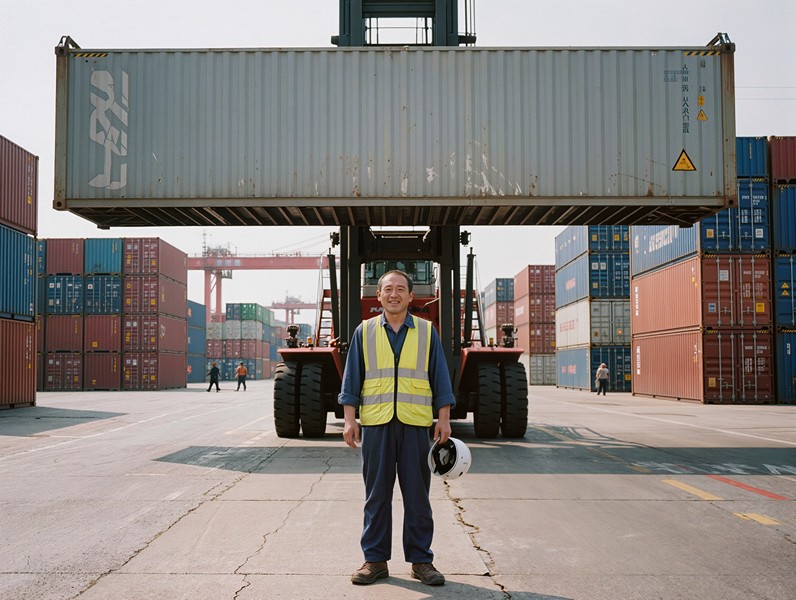
Where the market is heading.
The executive search market is projected to grow from 258.99 billion in 2026 to 427.53 billion by 2035, according to Business Research Insights. That is a compound annual growth rate of 5.14 percent — steady, not explosive. But within that growth, the cross-border segment is expanding at nearly double that rate.
Henderson Executive Search has observed that demand for supply chain and logistics leadership searches originating from Asian headquarters but targeting global placements has increased roughly 40 percent year-over-year since 2024. The flow is no longer one-directional — Western companies hiring in China — but increasingly multidirectional: Chinese companies hiring in Europe, Southeast Asian conglomerates recruiting in Latin America, Middle Eastern sovereign funds staffing up logistics arms with talent from South Asia.
Maybe the machines will catch up eventually. AI agents that can negotiate compensation packages, assess cultural fit through voice tone analysis, and predict retention risk with statistical confidence are already in development at several stealth-mode startups. But in 2026, the gap between what an algorithm can identify and what a relationship can close remains wide.
"For the top 5 percent of supply chain executives globally, you are not competing against other companies' AI," said the Henderson Executive Search partner. "You are competing against their current employer's counteroffer, their spouse's career, their children's school calendar, and their willingness to uproot their life for a bet on your company's vision. AI cannot compete with any of those things."
It is not a comforting message for an industry that wants to believe technology will solve every problem. But the firms that accept it — that invest in real cross-border relationships, real industry depth, and real search discipline — will be the ones placing the executives who actually run the global economy in 2030.
---
Sources: Reuters (April 28, 2026) — "Amazon targets mass hiring with agentic software"; TechCrunch (February 12, 2026) — "IBM will hire your entry-level talent in the age of AI"; TechCrunch (September 4, 2025) — "OpenAI announces AI-powered hiring platform"; ManpowerGroup Global Talent Shortage 2026 Survey; DSJ Global Supply Chain Talent Report 2026; Deloitte Global Human Capital Trends 2026; Business Research Insights Executive Search Market Report; BrainWorks State of Supply Chain Management 2026; PitchBook recruitment tech investment data.



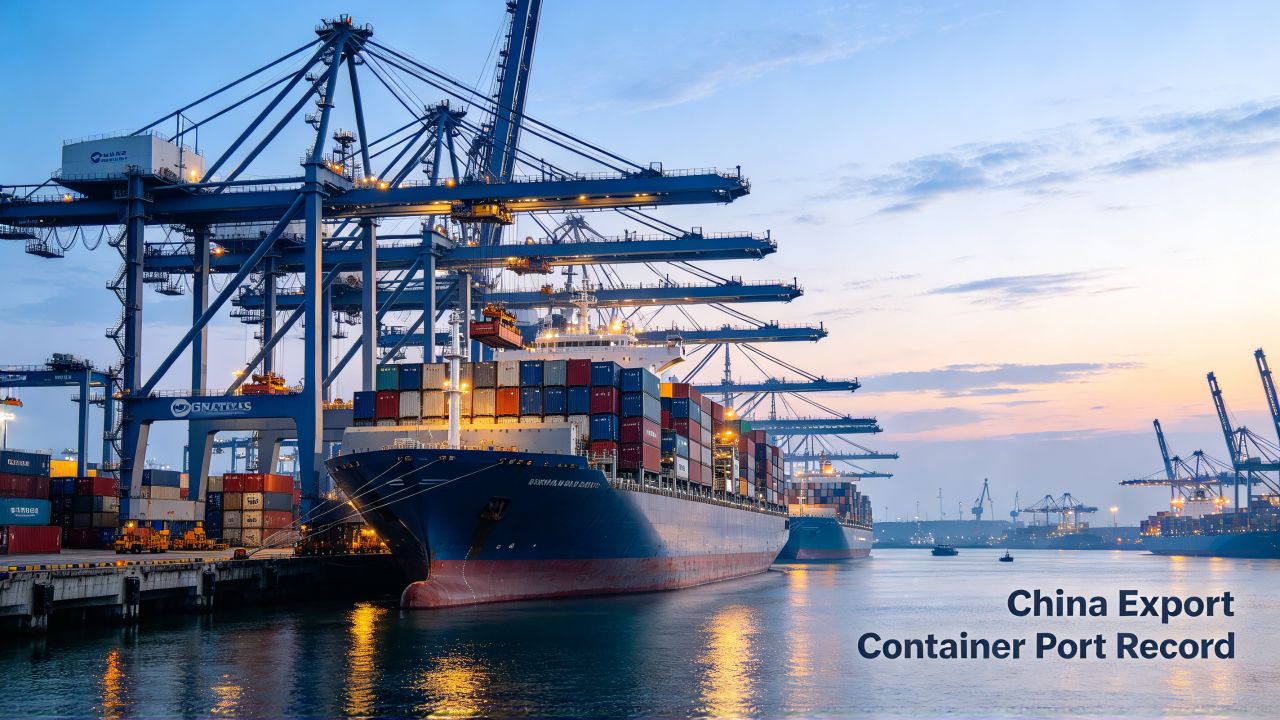



 Agentic AI Is Reshaping Cross-Border Supply Chains