
 0086-20-3156-0779


The starting times were deliberately staggered. JD.com went live at 8pm on 12 October with no deposit period and stock held in local warehouses. Tmall opened deposits on 15 October and began selling at 8pm on 20 October. Douyin's festival ran from 15 October to 11 November. Vipshop opened at 10am on 15 October. Zhang Yi, chief analyst at iiMedia Research, told Securities Times that China's e-commerce user base has effectively peaked, so platforms converge on the same window to stop brand budgets and consumer attention from being pulled away by a competitor.
The numbers that were released still point upward. Tmall reported 124 brands past RMB 100 million in the first four hours, 27,681 brands beating last year's entire first day, and 14 livestream rooms above RMB 100 million. It listed 1 million participating brands and 72 million products, both records. JD.com generated 150 million service orders between 12 October and 6pm on 30 October. Douyin reported a 59 per cent year-on-year rise in merchants passing RMB 1 million in sales and a 133 per cent rise in store-run livestream accounts passing RMB 10 million.
What matters is the gap. No platform published an industry total, and the third-party estimates do not reconcile. Citi's research note on 29 October put industry GMV growth at low to mid single digits. Syntun's forecast has total GMV at RMB 1.7 trillion, up 14.2 per cent, with the traditional e-commerce platforms at RMB 1.62 trillion, up 12.3 per cent. Ten percentage points separate the two views of the same festival, which tells you the outside world can no longer measure it.
The silence lands on internal scorecards. In previous years the campaign KPI was day-one GMV and return on ad spend, and there was only one direction to move. Once platforms replace that with merchant growth, new-product success and delivery speed, brand e-commerce teams have to redefine what finishing the job means. Henderson Executive Search sees the corresponding change in retail briefs: the first interview question has shifted from how much volume a candidate has run to how they account for the money.
The growth least discussed this year is not in goods. JD.com reported housekeeping sales up more than 240 per cent year on year in the first half of the campaign, routine cleaning and shoe and garment care up more than fourfold, and home cooking and pet sitting up more than tenfold. Footfall at JD Pharmacy rose 255 per cent. Across more than 4,000 JD Auto service centres footfall rose above 100 per cent and window-film orders rose more than fourteenfold.
Services have a property goods do not: they cannot be price-matched. The spread on a face cream across three platforms can be calculated to the cent, while the difference between two home-cleaning visits depends on whether the person arrives, how long they stay and how carefully they work. That makes services the one place platforms and retailers can still differentiate, and the hardest thing to scale, because every delivery runs through a person. Loosen the standard and the repeat purchase disappears.
Turning a service into a product requires a function most retailers do not have: service productisation. It covers supply (who delivers, how they are trained, how the price is set) and delivery (booking, arrival, inspection, after-sales). No box exists for it on a traditional retail organisation chart, so companies assemble it from operations, customer service and store teams. The briefs Henderson Executive Search receives for these roles are usually vague, because the client cannot name the background it wants and describes symptoms instead.
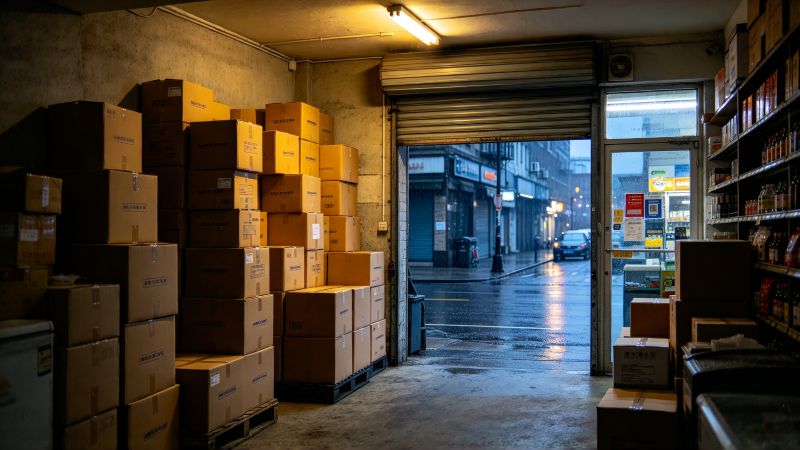
The other movement is physical. JD.com brought 7,472 new offline stores into the campaign for the first time, and the new JD MALL, city flagship and appliance specialty stores drew more than 6.2 million visits in the first half. Close to 3,000 stores in that network were repositioned as experience halls and service points. Orders for large appliances with delivery-and-installation included rose 200 per cent.
The role of the store has changed. For a decade it sat on the balance sheet as a cost line — rent, staff, fit-out amortisation — measured on sales per square metre. When the same space also serves as a forward warehouse, a showroom and an after-sales counter, new measures appear: catchment radius, inventory turns and service capacity. A store that can hold stock within three kilometres of the buyer and complete a transaction face to face is doing something a warehouse cannot.
When the measures change, the person running stores has to change. A retail operations director bred inside a chain excels at standardisation: displays, scripts, audit scores, store-opening cadence. The role now layers online operations and inventory scheduling on top, which means reading a single-store model, costing fulfilment and using data to set shifts. Such people are scarce because the two training paths conflict. Chains teach execution discipline; e-commerce teaches rapid iteration. Henderson Executive Search runs into this constraint on almost every store-operations brief: a candidate has spent ten years on one path, and experience on the other exists only on the CV, without the instinct.
Instant retail is the most predictable growth segment in this shift. Data from the Chinese Academy of International Trade and Economic Cooperation, the research arm of the Ministry of Commerce, put the market at RMB 36.571 billion in 2017 and RMB 781 billion in 2024, up 20.15 per cent, a growth rate 12.95 percentage points above national online retail. The forecast is past RMB 1 trillion in 2026 and RMB 2 trillion by 2030, a 12.6 per cent annual pace through the 15th Five-Year Plan. Penetration rose from 8 per cent in 2023 to 15 per cent in 2025.
The structure has settled into two large players and one small. Third-party estimates put Taobao Shangou at roughly 45.2 per cent and Meituan Shangou at roughly 45 per cent, together above ninety per cent of the market, with JD Miaosong at 8.4 per cent and Douyin and other short-video platforms at about 1.5 per cent. In the first quarter of 2026 daily orders averaged 62 million at Meituan Shangou, 52 million at Taobao Shangou and 8 million at JD Miaosong. During the 618 campaign instant retail transaction value rose 112.3 per cent.
The real blank space is below the tier-one cities. Penetration in tier-one cities already exceeds 40 per cent and new store growth has fallen below 5 per cent. County-level markets cover 1,866 counties and 52.5 per cent of the population, with penetration under 15 per cent; the segment is forecast at RMB 380 billion in 2026, growing 62 per cent. Supply is being laid down: Meituan Shangou has more than 10,000 lightning warehouses across 2,800 counties and cities, and JD covers more than 2,300.
The difficulty in counties is not the warehouse, it is the delivery model. Tier-one economics rest on order density: a rider takes consecutive orders inside one trading area and the cost per drop averages down. County orders are scattered across longer distances with sharper peaks, and the urban model does not compute. What county expansion needs is someone who can rebuild the maths — siting the network, designing a mixed rider structure, holding fixed cost down when volume is thin. Demand for that regional operations leader is rising and the pool is tiny, because county retail has not had the role for the past decade. Henderson Executive Search now receives these briefs regularly, and in most cases the client is hiring the function for the first time.
To read the hiring demand, look at how each platform has built its organisation. Alibaba funds instant retail infrastructure out of e-commerce profit, folding Freshippo into the e-commerce system so that owned stores and near-field delivery close the loop; Jiang Fan has set unit economics positive in the next fiscal year and group profitability in fiscal 2029. Meituan extends its delivery network into retail, buying Dingdong for supply chain capability and reporting a RMB 9.6 billion reduction in losses in the first quarter of 2026, with the core local commerce loss ratio falling from 15.5 to 3.2 per cent. JD.com runs self-operated plus offline formats, binding stores, services and logistics together.
Each path wants a different person. Alibaba wants someone who can connect far-field e-commerce with near-field delivery, weighted toward systems and traffic. Meituan wants someone who can push fulfilment cost to its floor, weighted toward capacity and algorithms. JD.com wants someone who can replicate offline formats, weighted toward stores and supply chain. Three briefs carrying the same title read almost nothing alike. Henderson Executive Search compares these descriptions regularly, and the conclusion is consistent: there is no common capability standard in the market, because every company defines the role around its own structure.
| Table 1 Singles' Day and instant retail, key figures (2026) | |||
| Metric | Figure | Change | Basis and source |
| Instant retail market size | RMB 781 bn | +20.15% | 2024; CAITEC, Ministry of Commerce |
| 2026 forecast | Above RMB 1 trn | — | RMB 2 trn by 2030; 12.6% a year; same source |
| Tmall brands past RMB 100m | 124 in 4 hours | — | 27,681 brands beat last year's first day; company data |
| JD service orders, first half | 150 m | Housekeeping +240% | 12–30 October, 6pm; company data |
| New offline stores, first time | 7,472 | 6.2 m visits | JD new-format stores, first half; company data |
| Total GMV, two estimates | RMB 1.7 trn | +14.2% | Syntun forecast; Citi sees low-to-mid single digits |
| County-level instant retail | RMB 380 bn | +62% | 2026 forecast; penetration under 15%, tier-one above 40% |
Translated into roles, the shift concentrates in four places. The omni-channel operations director owns the join between online and offline inventory, pricing and membership, so a customer sees one assortment at every entry point. The retail operations director and regional general manager now carry order density and service capacity on top of store productivity. The fulfilment and warehousing lead balances speed against cost and decides where a forward warehouse goes, how large it is and how it is replenished. The category and private-label director matters because once price competition cools, the only remaining differentiator is supply itself.
All four need the same combination: goods, place and people. Someone raised in e-commerce understands traffic and conversion but has no feel for the physical constraint of a store — how many SKUs fit in 300 square metres, how fresh produce spoils in summer, how many picks a shift can complete. Someone raised in offline retail understands stores and supply chains but resists data-led iteration. Talent that has genuinely done both is scarce, and this is the constraint that stretches time-to-hire across consumer and retail briefs.
Henderson Executive Search sees the same pattern across FMCG and retail mandates. The first interview asks whether a candidate has worked in this channel; by the third, the question becomes whether they have changed one. The first is experience matching, the second is capability transfer, and the second is the actual bar. A consumer goods executive search firm will normally test talent for channel-building separately, because on a CV the achievement usually appears as a single clause about developing new channels.
Pay has moved up across retail and consumer roles in 2026. Salary research reports show omni-channel operations directors clustered between RMB 450,000 and 900,000 a year, e-commerce general managers between 600,000 and 1.2 million, and supply chain directors between 400,000 and 800,000, with a premium of 15 to 25 per cent at equivalent grade for candidates who have run instant retail or forward-warehouse operations. These are listed and survey ranges rather than closed deals, and Henderson Executive Search sees similar bands, with listed and settled figures usually about ten per cent apart.
Money does not solve this one. There are three obstacles. The talent pool is thin: instant retail only became a serious business in 2020, and few people have taken a region from zero to profit. Internal development is slow: the capability is built inside real warehouses, real stores and real order spikes, which takes three to five years, and expansion will not wait. Cross-industry transfer is expensive: people from supermarket chains, convenience retail, food-service supply and parcel logistics can all move across, but each move requires learning a new system and a new set of accounts.
| Table 2 Four roles: what they need and where they are found | |||
| Role | Core capability | Main source pool | Hiring constraint |
| Omni-channel operations director | Joining inventory, pricing and membership systems | Brand e-commerce, platform category teams, chains | Few have completed a real integration |
| Retail operations director | Single-store model, service capacity, replication | Supermarkets, convenience chains, forward-warehouse brands | Many read store productivity; few read fulfilment cost |
| Fulfilment and warehousing lead | Network design, rider structure, speed versus cost | Parcel logistics, delivery platforms, fresh supply chains | Urban models break at county level and need rebuilding |
| Category and private-label director | Assortment, supplier development, margin design | Membership clubs, discount retail, FMCG brands | Private-label depth sits inside a few companies only |
Retail hiring has a calendar. The stretch from the end of Singles' Day to Spring Festival is the densest of the year: campaign data is in, the full-year accounts can be read, reorganisation plans get approved, and candidates are most willing to move once bonuses are paid. March to May is the second window, by which point the strongest people have already been approached. For a company planning an omni-channel rebuild or county expansion in 2027, starting now buys a quarter compared with waiting until after the holiday.
Three practical notes for HR teams. First, write channel transfer into the brief rather than channel experience; the former screens capability and better predicts whether someone will still fit when the business changes next year. Second, build a regional talent pipeline before expansion starts, because once the roll-out begins, hiring in a hurry means buying from a competitor at twice the price. Third, give service roles their own line on the organisation chart instead of parking them under e-commerce or customer service, since service productisation and traffic operations follow different logic and combining them usually leaves both half-done.
Competition among search firms in retail and consumer is already intense in the cities where brand headquarters cluster, and the same candidates get approached repeatedly. What separates firms is depth of role understanding: whether a consultant can break a brief into three testable capabilities before the client has finished describing it. Henderson Executive Search runs an organisation diagnostic before presenting candidates on these mandates. A Shanghai headhunter working with local brand headquarters faces a different role structure from a team in Hangzhou, where e-commerce operations roles split more finely, or Shenzhen, where cross-border and instant retail roles overlap. Regional context changes the brief, and one template rarely travels.
Where do retailers usually find an omni-channel operations director?
Three pools work best. Brand-side e-commerce leaders who later took on offline channels have real exposure to inventory and pricing conflicts. Platform category managers understand traffic and delivery rules and adapt quickly on the brand side. Chain retail operations leads are strong on offline execution and need data capability added. Each pool has a different gap, so scoring all three on one sheet tends to flatten the differences that matter.
How do you test whether a candidate really understands instant retail fulfilment?
Ask for three calculations: cost per order, how capacity is scheduled at peak, and how fixed cost is absorbed when county density is thin. Someone who has done it answers with conditions — it depends on category mix, on whether riders are employed or crowdsourced. Someone who has only read about it answers with conclusions. A manufacturing headhunter uses the same technique on plant roles, and it works better than reading project descriptions on a CV.
Is it sensible to start recruitment right after Singles' Day?
Yes, and it is one of the two best recruitment windows in the year. Campaign data has just landed, so the company can see which capability fell short; candidates have just been paid and are most open to moving; budgets remain adjustable before the first-quarter close. Waiting until March or April means the strongest candidates have already been screened, and the remaining options cost more.
Which roles should be in place before county expansion begins?
Three. A regional operations leader accountable for the multi-city, multi-warehouse P&L. A network planning role that decides siting and warehouse format. A local supply chain and purchasing lead who develops regional suppliers. The first two can be sourced nationally; the third has to be local, because county supply depends on relationships and delivery resources that a newcomer cannot build inside six months.
What should a retailer look for when hiring for private label?
Three things: a complete cycle from selection to shelf, experience handling the shelf conflict between private label and branded goods, and a clear view of margin structure and return rates. Only a small number of Chinese retailers have built private label as a system, so the pool is narrow by construction, which is why these searches take longer than most retail mandates.
Is a Shanghai headhunter better placed than a regional firm for these roles?
It depends on where the decision sits. Brand headquarters in Shanghai hold the budget and the organisation design, which makes a Shanghai search team the natural entry point. Execution still depends on regional reach: county expansion, store roll-outs and local supply hiring happen in places the headquarters team does not cover. Henderson Executive Search therefore runs these mandates as one project with a national candidate map rather than a city-by-city sequence.
Sources: Chinese Academy of International Trade and Economic Cooperation (Ministry of Commerce) instant retail research; JD.com, Tmall and Douyin Singles' Day disclosures, October 2026; Citi research note, 29 October 2026; Syntun data forecast; Securities Times, 15 October 2026; Ebrun retail weekly, 2 November 2026; company filings on Alibaba, Meituan and JD.com segment performance. Salary ranges are drawn from public salary research reports and platform listings and are indicative rather than closed transactions.






 4,142 Foreign Firms at CIIE. What Multinationals Now Ask of a China Leader