
 0086-20-3156-0779



On 22 October, Audi published a China leadership announcement. Effective 1 November 2026, Zhang Jun succeeds Johannes Roscheck as President of Audi China. Rolf Michl, until then managing director of Audi Sport, moves to Shanghai as chief operating officer, and the China management board is reduced to a two-person structure led jointly by the pair. Roscheck returns to Ingolstadt in early 2027. It is the first time since Audi China was established that the top position has gone to a Chinese executive.
The CV is worth reading in full. Zhang brings more than twenty years of international management experience. Before this appointment he was vice president of Chery International and CEO of the Chery brand, having earlier run Chery's European business. He was a managing director at Stellantis, leading Alfa Romeo and DS in China, and held leadership roles at Nissan covering Japan and North America. Between 2018 and 2020 he worked at Audi China in senior management, helping to build the SAIC-Audi sales organisation. A foreign company, then a Chinese carmaker, then back to the foreign company: the path closes a loop.
Set the sales curve beside the announcement and the timing stops looking arbitrary. Audi's China deliveries reached 729,000 units in 2023, up 13.5 per cent; fell to 649,000 in 2024, down nearly 11 per cent; and slid to 617,500 in 2025, a decline narrowed to about 5 per cent. After two consecutive years of contraction, the group handed decision-making authority to someone fluent in the pace of local competition. Audi's own wording cites new competitors, technical innovation and shifting customer expectations, and calls for a leadership team combining international experience, deep local market knowledge and strong execution.
The phrase easiest to skim past is the one about understanding Chinese competitors. The traditional mandate for a China president was execution of group strategy plus control of the local channel. The mandate now on the table is judgement about local rivals. That rewrites the profile for the role, and it explains why a man who took Chery into Europe was invited back by a German luxury brand. In China CEO search work at Henderson Executive Search over the past two years, client briefs rarely open with familiarity with group process and now open with decisions made independently in this market.
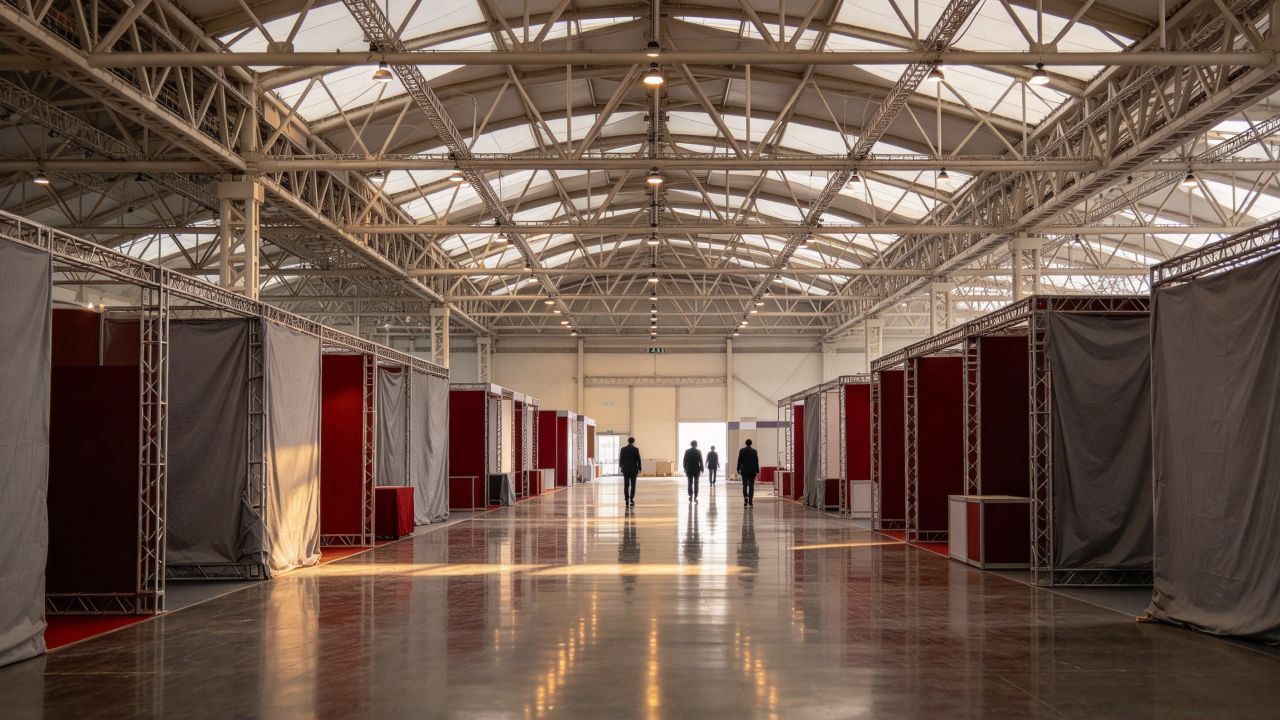
The ninth CIIE runs from 5 to 10 November in Shanghai. Ministry of Commerce figures released on 16 October put participation at 162 countries, regions and international organisations, with 4,142 foreign companies exhibiting. Total space passes 440,000 square metres for the first time, the corporate exhibition alone exceeding 370,000. Fortune 500 companies and industry leaders top 300 for the first time, and close to 200 institutions have attended all nine editions; more than 2,000 exhibitors are first-timers, and over 480 products will make a global, Asian or China debut.
The mix of exhibitors is shifting as well: American companies occupy more than 50,000 square metres, first for an eighth consecutive edition. Across nine editions, CIIE has drawn 27,000 company-visits from more than 180 countries and regions, with intended deal value above USD 580 billion. The 2,000 first-timers matter more than the headline scale. Each company attending for the first time is an organisation that has just written serious China commitment into its annual plan. Henderson Executive Search has a working observation about such entrants: the first people they hire tend to shape the organisation for the next five years.
Austrian machine tool maker WFL is a useful case. It spent 36 days shipping a high-end milling-turning centre from Austria to Shanghai for an Asian premiere, its first appearance at the expo. Its Beijing chief representative, Liu Yanxia, described CIIE and Shanghai as the core hub for expanding across Asia-Pacific. Organisational language translates that into a representative office first, then a decision on a trading company, a service centre or local assembly. A representative office is a headcount of one; a trading company a dozen; local assembly several hundred. Recruitment demand tracks whichever step the company has reached.
Companies that have attended all nine editions travelled the path in reverse. IKEA brought a China-premiere home furnishing solution; Johnson Health Tech is exhibiting for a fifth time, its stand grown from about 200 square metres to 740, and its China chief executive, Li Yongkai, noted the group set up a China home R&D centre before it ever exhibited. From no presence to a presence, from presence to R&D, from R&D to supplying the world: each segment needs different talent.
Shanghai's vice mayor, Lu Shan, put it plainly at the October briefing. More exhibitors are moving from six days of exhibiting to rooting in China and increasing investment. Some convert from traders into investors, producing in China for global supply. Others upgrade from serving the China market to becoming a global R&D hub. Between January and August, Shanghai registered 4,172 new foreign-invested enterprises and USD 12.382 billion in contracted foreign investment, up 9.8 per cent. Forty-four new regional headquarters and 39 new R&D centres were certified, taking cumulative totals to 1,120 and 675 (Table 1).
Sanofi illustrates what growing a research arm means in practice. In September, an upgraded Sanofi Shanghai foreign-funded R&D innovation centre opened in Jing'an with its own separate legal entity. A translational excellence centre run with Huashan Hospital is the fourth of its kind globally and the first outside Europe. The more important change is in the division of labour. Sanofi's collaboration with Huashan previously centred on later-stage international multicentre trials, where Chinese enrolment accounted for about 15 per cent of the total, protocols were designed globally and the China team executed. Two early-stage trials now run entirely in China, with all participants recruited locally and the Shanghai team involved in protocol design from the outset.
Tang Lei, who leads Sanofi China's translational medicine work, describes the shift as moving from receiving a script written elsewhere to writing it. The rationale is time. Patent protection for innovative drugs is finite, and shaving weeks from each phase can cumulatively shorten a development cycle that normally runs a decade by a full year. The recruitment implication runs deeper than it appears. Once the authority to write the script moves, the China organisation needs people who can decide which trials to run, how to design them, and how many people and how much money to commit. The functional upgrade of multinational regional headquarters in Shanghai is, at bottom, an upward shift in the level of every role beneath it.
The count has moved modestly: certified R&D centres in Shanghai rose from 670 to 675, regional headquarters from 1,107 to 1,120. The change is in composition, with new sites carrying real research mandates rather than a signboard. Henderson Executive Search sees a pattern: headquarters put R&D in China once the local team has proved it can define a problem.
| Table 1. Foreign investment in China: key figures, 2026 | ||
| Indicator | Figure | Basis and source |
| Foreign exhibitors at CIIE | 4,142 | Ninth edition, largest on record; MOFCOM briefing, 16 Oct 2026 |
| First-time exhibitors | 2,000+ | Same source |
| Fortune 500 and industry leaders | 300+ | First time above 300 in nine editions |
| Shanghai actual FDI | USD 11.59bn | Jan-Aug, +6.9% yoy; Shanghai Commission of Commerce |
| Regional headquarters | 1,120 | Cumulative certifications; 44 added in Jan-Aug |
| Foreign-funded R&D centres | 675 | Cumulative certifications; 39 added in Jan-Aug |
| China imports | RMB 16.7tn | Jan-Sep, +22.3% yoy; General Administration of Customs |
Put the pieces together and the boundaries of the China general manager role expand in three directions. The first is full profit and loss. The China head once answered for revenue and share, with cost centres, research and supply chain at headquarters. As groups move research and capacity into China, every line of the P&L lands locally. The second is cross-system coordination. Audi's two-person board, a local principal paired with a headquarters veteran as operator, is itself a cross-system solution requiring both men to work in the other's language.
The third is building from zero. Johnson Health Tech set up a China home R&D centre before its first expo appearance, Herbalife upgraded its Shanghai product innovation centre into a global one, and Sanofi created a standalone R&D legal entity. Each move needs someone to assemble a team, define processes and set performance measures from a blank page, with no reference point: headquarters cannot supply a template, the local market cannot supply a ready-made team, and professional depth is the least scarce ingredient.
Zhang Jun's record keeps being cited because it leaves evidence in all three directions. Stellantis and Nissan gave him process discipline inside a foreign system; Chery gave him the speed and cost instincts of a Chinese carmaker; two years at Audi China gave him ground-level understanding of a dual-joint-venture structure. Audi's line about combining international experience with deep knowledge of the Chinese market states that value directly. In China general manager assignments at Henderson Executive Search, clients now ask explicitly for candidates who have made local decisions inside a foreign company and built systems inside a domestic one.
The first is the China principal, where pricing has moved from selling to running a business. The tests are concrete: has this person carried a complete P&L, made trade-offs when the budget was cut, said no to headquarters and absorbed the consequences. Few come out of a pure sales line; most are business unit heads, regional general managers or operating executives who have run a standalone unit. Salary research reports show long-term incentive weighting rising and fixed pay falling, a structural shift that is itself a price on accountability among senior talent in China.
The second is the R&D centre head, where the logic has moved from receiving projects to defining them. The value of a role like Tang Lei's at Sanofi lies in judging which trials to run, how to design them and where to commit resources; volume of execution says little about it. These people combine two traits: a global project record inside a multinational pharmaceutical or device company, and genuine standing within China's hospital, regulatory and clinical networks. As foreign R&D centres set up separate legal entities, the position has been elevated from R&D manager to head of a research entity, with compliance, budget, government affairs and local hiring added. The addressable talent pool narrows sharply.
The third is the local supply chain director, where the logic has moved from procurement execution to localisation strategy. Cost and delivery used to be the whole scorecard. There is now a second layer: which stages to move into China, which local suppliers to qualify, and how to manage conflict with a global procurement organisation. Every company at the expo announcing production in China for global supply has to solve this first. Such candidates need fluency in both global sourcing rules and the Chinese supplier ecosystem, and those two languages usually grow in different people. The most common failure Henderson Executive Search sees is a client recruiting against a procurement director profile and finding the real requirement is someone who can redraw a supply chain's geography.
| Table 2. Three stages of multinational organisation in China | |||
| Stage | Structure | Typical roles | Evidence |
| Agent and representative office | Trading agent or a one-person rep office | Chief representative, sales manager | WFL's Beijing rep office before its first expo |
| Sales and production base | Wholly owned or joint venture company, local plant | China general manager, plant director, supply chain director | P&L and capacity local, R&D still at headquarters |
| R&D and decision centre | Regional HQ plus R&D legal entity, supplying globally | China president, R&D centre head, global function leader | Sanofi Shanghai R&D centre, Herbalife global innovation centre |
Localisation has been discussed for years, and the hard part sits in arranging people during the transition. An expatriate executive understands the language of headquarters, global process and how to win resources in a boardroom, but reads local speed and cost structures through a layer of distance. A local executive understands channels, customers and how to survive a price war, but can miss the compliance lines and allocation logic of the centre. Audi's answer puts both types into one decision layer, the local principal owning direction and execution, the headquarters veteran running operations, decision paths shortened while the interface to Ingolstadt is preserved.
The recruitment implication is that the scarcest talent in a transition is the one who can translate between two systems, with seniority a secondary consideration. Henderson Executive Search has seen several transition arrangements in manufacturing clients, and results differ widely, the difference coming down to whether the two people will share a single decision rhythm. Such candidates show three verifiable traits: time at headquarters, enough to hear what global alignment actually means; a signature signed independently in the China market, with the consequences that came with it; one cross-system integration, whether a joint venture restructuring, a dual-brand merger or the establishment of a research entity. Zhang Jun's 2018 to 2020 stint at Audi China matters here more than the headline, because two years of adjustment were paid for in advance. Companies hiring at this level tend to screen on industry fit and overlook system familiarity, and the latter often determines whether the first six months produce output or consumption.
Six days of exhibition, ninety days of decision. That is the usual rhythm for a foreign company landing a project in China: contact at the show, assessment within a month, approval by month two, recruitment by month three. The window worth watching runs from mid-November into February, with the expo serving as a starting line. Shanghai has laid on 54 investment tour routes and 34 promotion events this year to compress that cycle.
When a regional headquarters lands, the first senior talent hires are usually operating and functional roles. On the project cadence Henderson Executive Search works to, a foreign company establishing a China headquarters fills three positions first: China head or chief operating officer, finance head and human resources head. Setting up a research entity, the first two become the R&D centre head and the regulatory affairs head. Starting local production, the first two become the supply chain director and the plant director. All begin before the organisation exists, which puts the highest weight on having built something from zero.
Policy adds a second source of time pressure. Announcement No. 29 of 2026 sets the VAT export rebate for new energy vehicles at 9 per cent from 1 April 2027, down from 13 per cent, covering 67 commodity codes. A European draft on hybrid quotas proposes 350,000 units in the first year with increases capped at 6 per cent thereafter. Together these pull forward the timetable for producing and managing inside China, and foreign-invested enterprise recruitment moves with it.
Multinationals hiring senior people in China have moved from a good-looking CV to verifiable evidence: a full P&L carried, a cross-system integration delivered, decisions taken independently here with consequences attached. None of the three survives an interview; they are confirmed only by examining specific projects.
That is where executive search earns its place at this stage. The difficulty in foreign-invested enterprise recruitment is rarely an absence of candidates. It is that the right talent sits inside another system and does not know this door is open. An operating executive who has integrated two brands inside a joint venture may never think to look at a European company preparing to open a China research entity. A vice president who took a domestic carmaker into Europe may never imagine a luxury brand is looking for someone who understands its competitors. Creating one effective conversation between those two ends is the whole job of a headhunter, and it is why companies that run senior searches in-house so often end up with the same shortlist as their competitors.
Henderson Executive Search has served foreign-invested clients across manufacturing, healthcare and consumer sectors for years, and the clearest change this year is in how clients frame the question. They used to ask what the market pays for a role. More often they now ask how many people like this exist in China, where they sit and whether they would move. The question has shifted from price to supply, which tells you the hiring logic of multinationals in China has moved from recruiting to a budget toward ranking roles by scarcity. That is a market a headhunter reads daily. Among the 4,142 companies at CIIE, what determines who is still standing two years from now is the handful of appointments made in those ninety days. Stand size says nothing about it.
How do foreign companies usually fill a China general manager role?
Three routes run in parallel: retained executive search, industry referral and internal promotion. At general manager level, retained search dominates because the target talent pool is extremely narrow, often confined to a dozen companies in the same sector, and applications through public channels are effectively useless. The scope is what employers most often underestimate, since the best candidate frequently sits in an adjacent industry rather than a direct competitor.
What has changed in the China leader brief as localisation has progressed?
The mandate has moved from executing group strategy to defining China strategy. Channel control and sales delivery used to be the measures. Today the questions are whether the person can carry a P&L independently, say no to headquarters, and build a research or supply chain organisation from zero. The shift is most visible at China president level, which is why more multinationals are appointing local executives to their top China role.
Which roles are hired first when a regional headquarters opens in Shanghai?
Typically three: China head or chief operating officer, finance head, and human resources head. All three begin before the organisation takes shape, so building from zero matters more than sector tenure when assessing senior talent. When a research entity is established, the first two become the R&D centre head and the regulatory affairs head.
How does hiring a foreign R&D centre head differ from hiring a research engineer?
Engineers are assessed on technical depth and project delivery. A centre head is assessed on the ability to define problems: which projects to run, how to design them, how much resource to commit. Since foreign R&D centres in China have begun operating as separate legal entities, the role also carries compliance, budget, government affairs and local recruitment, which narrows the addressable pool considerably.
Where do local executives most often struggle after joining a foreign company?
Usually in decision-making style and communication cost rather than professional capability. Domestic systems favour acting and then reporting; foreign systems favour aligning and then moving. Domestic organisations watch quarterly openings, foreign ones run on annual budget cycles. People who can translate between the two usually have either headquarters experience or one cross-system integration, and that background deserves separate weighting in assessment.
Will the 2027 export rebate cut affect hiring plans at foreign companies in China?
Yes, mainly on timing rather than volume. Cutting the new energy vehicle export rebate from 13 to 9 per cent, alongside European quota proposals, raises the value of producing and managing inside China and pulls the localisation timetable forward. In recruitment terms, demand for supply chain directors, plant directors and China principals will be released earlier. Henderson Executive Search expects those briefs to reach the market from the first quarter of 2027.
Sources: Ministry of Commerce briefing on the ninth CIIE, 16 October 2026; China News Service, 31 October 2026; Audi AG announcement, 22 October 2026; Shanghai Municipal Commission of Commerce; General Administration of Customs of China; People's Daily Shanghai, 9 October 2026; Ministry of Finance and State Taxation Administration Announcement No. 29 of 2026.





 Chemical Profits Rose 49.2%. POE Plants Are Arriving Faster Than the Engineers Who Can Commission Them