
 0086-20-3156-0779
0086-20-3156-0779
0086-20-3156-0779


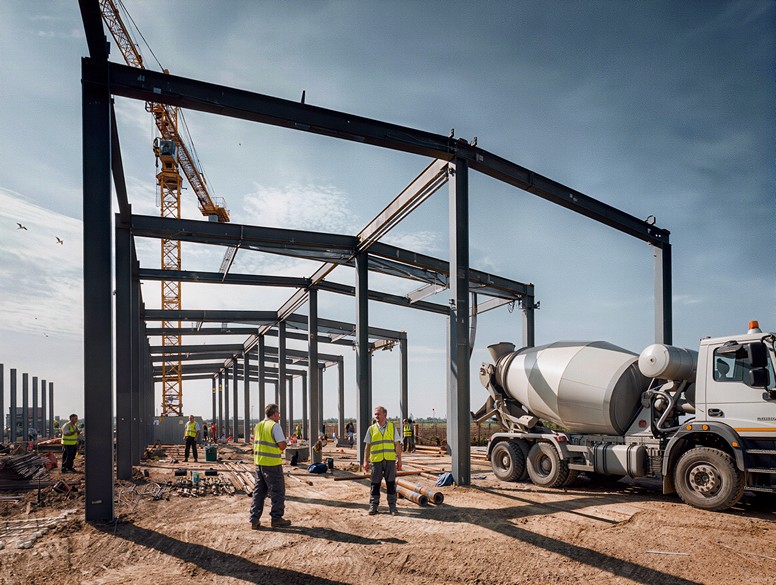

The Numbers No One Prepared For
The International Renewable Energy Agency counted 16.6 million people employed in renewable energy worldwide as of 2024 — a figure that has grown faster than any other energy segment. By mid-2026, that number had already crossed 18 million, according to Green Fuel Journal's February 2026 market analysis, which drew on IRENA and ILO datasets. Clean energy jobs now grow at roughly twice the pace of the global economy as a whole.
But here is the number that keeps energy executives awake: about 60 percent of companies in the sector report labor shortages, per the International Energy Agency's World Energy Employment 2025 report. And the shortage is not limited to electricians, solar installers, or battery technicians — those roles are hard to fill, certainly. What keeps project timelines in jeopardy is the near-impossibility of finding senior leaders who can scale a clean energy business while navigating policy instability, capital markets, and cross-border supply chain complexity all at once.
The Lee Group Search Renewables Hiring Snapshot 2026, published in June, found that time-to-hire for executive roles in clean energy has stretched to 5.8 months on average — nearly two months longer than the broader C-suite average. Time-to-fill for senior engineering leadership in battery storage now exceeds seven months in some North American markets.
"For the first time in my career, I have clients who are willing to wait six months for the right candidate rather than settle," said a partner in the Energy & Cleantech practice at Henderson Executive Search, the cross-border retained search firm that has tracked renewable energy leadership hiring since 2019. "Two years ago, they would have taken the second-best person after eight weeks. Today they understand that a bad hire in a chief operating officer role at a battery gigafactory can cost more than the search itself."
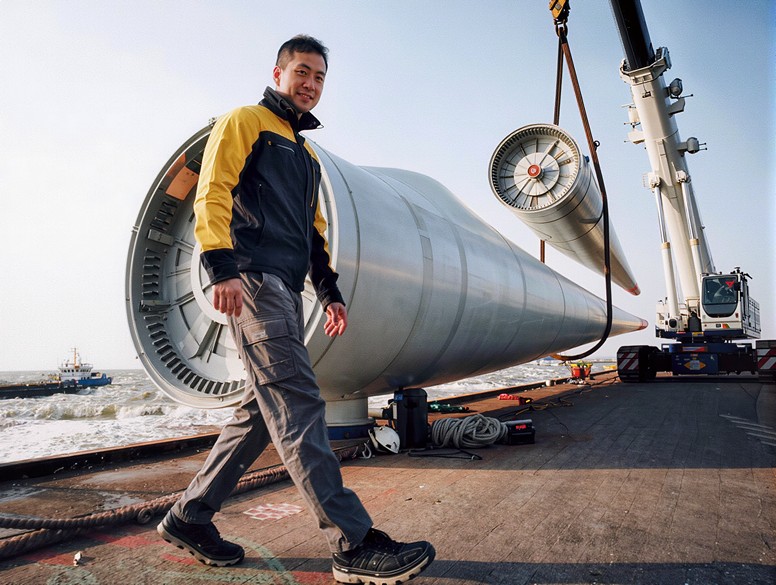
The Gigafactory Talent Squeeze
The scale of industrial investment in clean energy manufacturing has no modern precedent. In Hungary, CATL broke ground in early 2026 on a 5 billion European gigafactory powered entirely by renewable energy, with a 200 MW solar installation built into the site. In India, Waaree Energies committed 975 million (₹8,000 crore) to build an integrated lithium-ion battery gigafactory in Andhra Pradesh — a project expected to generate 3,000 direct jobs but requiring a leadership team with a combination of battery chemistry expertise, Indian regulatory fluency, and international supply chain experience that barely exists. The UK Gigafactory Commission's January 2026 report warned that Britain needs at least four gigafactories by 2030 to meet EV and stationary storage demand — and that finding the executive talent to run them is "the single biggest non-capital constraint" to achieving that target.
Across the Atlantic, the Inflation Reduction Act and CHIPS Act have triggered a wave of factory construction that has pulled clean energy executives out of traditional energy roles and into entirely new organizational structures. A solar manufacturing executive told Henderson Executive Search's team that his company had to recruit a chief procurement officer from outside the energy industry entirely — the preferred candidate was a semiconductor supply chain executive with zero renewable energy experience on paper. "We needed someone who knew how to build a supply chain from scratch at high speed," he said. "The energy background was secondary."
That willingness to hire from adjacent sectors — and the corresponding premium those hires command — is reshaping the executive compensation landscape in clean energy. According to compensation data collected by the Lee Group, base salaries for COO-level roles at battery storage companies have risen 22 percent year-over-year, with total packages increasingly tied to project milestone delivery rather than annual revenue targets.
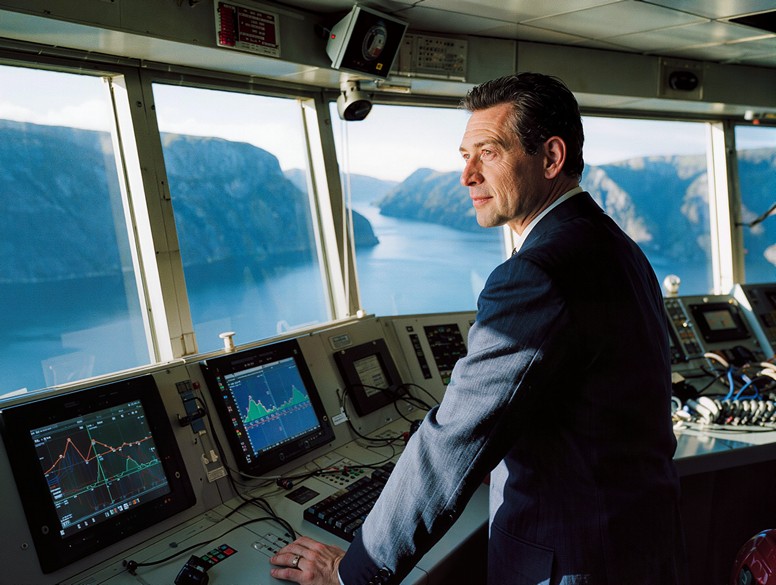
Policy Uncertainty Complicates Every Hire
The clean energy sector's growth is not linear, and neither is its hiring. On July 15, 2026, Thailand approved a new package of measures to bolster clean energy markets, while simultaneously ten European Union member states urged Brussels to rethink a proposed new carbon price on fuel imports. The same week, Indonesia and Singapore signed 26 bilateral agreements spanning clean energy interconnection and digital infrastructure — creating demand for executives who understand ASEAN energy politics as well as they understand solar PPA structures.
For executive search firms like Henderson Executive Search, the policy dimension introduces a variable that did not exist in previous hiring cycles. A chief development officer for a European offshore wind developer must now understand not just turbine technology and project finance but also the emerging carbon border adjustment mechanism, national content requirements in multiple jurisdictions, and the political landscape of grid interconnection across borders.
A partner in Henderson Executive Search's Singapore office noted that the firm now routinely includes geopolitical briefing sessions as part of its executive assessment process for cleantech roles. "We are asking candidates to explain how they would handle a supply chain disruption from China, a regulatory change in Brussels, and a labor shortage in their own backyard — all in the same interview. Five years ago, none of those questions would have come up."
The Great Executive Poaching Accelerates
Inter-industry talent flow has become the defining hiring pattern in clean energy in 2026. According to iRecruit's renewable energy recruitment trends report, 34 percent of executive placements in solar PV and battery storage in 2026 have come from outside the energy industry — drawn from semiconductor manufacturing, automotive engineering, and even defense contracting.
The rationale is simple: the skills needed to build and operate multi-billion-dollar factories — supply chain orchestration, capital project management, quality systems at scale — are more industry-agnostic than the clean energy sector initially assumed. What candidates lack in renewable energy domain knowledge, they compensate for in operational depth that the sector's incumbents often cannot match.
Heidrick & Struggles' decision to expand its dedicated Climate and Sustainability Practice in late 2024, hiring four senior partners in Europe specifically to meet clean energy executive demand, signaled that the big global search firms see this as a structural shift rather than a cyclical uptick. Mid-sized retained search firms, including Henderson Executive Search, have responded by building dedicated battery and grid-storage practice groups that combine traditional executive search methodology with energy-sector-specific assessment frameworks.
The result is a market where clean energy CEOs increasingly sit on multiple boards across adjacent industries, simultaneously competing for and lending talent to semiconductor, automotive, and industrial technology companies. One Henderson Executive Search advisor described the phenomenon as "executive circularity" — the same 300 to 400 individuals cycling through leadership roles at different companies, leaving mid-tier and second-generation clean energy firms unable to access the talent pool that first-movers have locked up.

Compensation That Mirrors the Stakes
As the talent bottleneck tightens, compensation structures are evolving to reflect a fundamentally different risk profile. The Lee Group's June 2026 snapshot documented that COO-level compensation in US battery storage includes average sign-on bonuses of 350,000 to 500,000 — comparable to what semiconductor manufacturing executives command. Base salaries for senior project development roles in solar and wind have crossed the $250,000 threshold for the first time.
But the real story is in the incentive structure. An increasing share of executive compensation in clean energy is tied not to quarterly earnings but to project milestones: megawatts commissioned, gigafactory construction phases completed on schedule, battery storage systems grid-connected. These milestone-based packages reflect the reality that the industry's biggest risk is operational — not financial.
"The market has woken up to something we have been saying since 2023," the Henderson Executive Search partner said. "You can raise all the capital you want, but if you do not have the leadership to deploy it, your project sits idle. The compensation numbers are not inflated. They reflect the actual cost of delay."
A recent analysis by the solar industry workforce task force estimated that nearly 50 percent of solar firms report project delays directly attributable to staffing gaps. The cost of those delays — in lost tax credits, penalty clauses, and missed revenue windows — runs into the hundreds of millions across the global project pipeline. Against that backdrop, an extra $150,000 in base salary to secure the right COO looks like a bargain.

What Boards Are Asking Now
The clearest signal that clean energy executive hiring has entered a new phase comes from the questions board members ask during search briefings. Henderson Executive Search advisors report that the two most common questions in Q2 2026 were: "Can we find someone who has done this at scale before?" and "If we cannot, how do we build a team around a less experienced leader?"
Both questions reflect a market that has outgrown its talent supply. The first wave of clean energy executives came from utility backgrounds and fossil fuel retraining programs. The second wave came from project finance and engineering consultancy. The third wave — the one needed now — must combine all of those backgrounds with the operational muscle to run multi-billion-dollar manufacturing plants in an environment of permanent policy flux.
A growing number of boards are opting for a "squad" approach, hiring two or three senior leaders simultaneously — a chief operating officer with factory experience, a chief commercial officer with cross-border renewable energy PPA expertise, and a chief technology officer with battery or grid-scale storage domain knowledge — rather than searching for a single CEO or general manager who supposedly has it all.
These searches are among the most complex that Henderson Executive Search handles. A single mandate for a European clean energy platform in early 2026 involved simultaneous recruitment across five countries, three time zones, and two competing bidders for the same COO candidate — a scenario that would have been unthinkable in the sector five years ago.

The Long View: Talent as Infrastructure
The IEA's April 2026 survey contained a sobering finding: only 35 percent of clean energy workers described their job as a "quality job" — defined by fair wages, safety, career progression, and job security. That perception gap matters because the sector cannot attract and retain the leadership pipeline it needs if the foundation is unstable.
Henderson Executive Search believes that clean energy companies that invest in organizational design — clear career pathways, cross-functional rotation programs, and board-level talent committees — will outperform those that simply try to buy talent on the open market. The same firms that built their capital infrastructure strategy around gigafactories and grid interconnections now need to build their talent infrastructure strategy around executive succession planning, internal development programs, and retained search partnerships that operate at the same strategic level as their M&A and finance teams.
The clean energy transition was always going to be a people problem. What the first half of 2026 has made unmistakably clear is that the people problem is not downstream of the industry's growth — it is upstream. The companies that solve it first will be the ones that define the sector for the next decade.
Sources: International Renewable Energy Agency (IRENA) and International Labour Organization (ILO), "Renewable Energy and Jobs — Annual Review 2024" (published January 2026, cited in Green Fuel Journal Feb 2026); International Energy Agency, "World Energy Employment 2025" (December 2025); IEA survey of energy workers (April 14, 2026); Lee Group Search, "Renewables Hiring Snapshot 2026" (June 2026); iRecruit, "Renewable Energy Recruitment Trends 2026" (May 2026); Green Fuel Journal, "Renewable Energy Jobs in 2026" (February 27, 2026); IRENA data cited by MVA Pulse solar workforce analysis; CATL Hungary gigafactory announcement via Energy Storage News; Waaree Energies gigafactory announcement via Economic Times (February 2026); UK Gigafactory Commission Report (January 2026); Heidrick & Struggles Climate and Sustainability Practice expansion (late 2024); Thailand clean energy policy package (July 15, 2026); Indonesia-Singapore bilateral agreements (July 2026); EU carbon price debate coverage (July 15, 2026).





 How Cross-Border Restrictions Are Reshaping Global Supply Chain and AI Leadership