
 0086-20-3156-0779
0086-20-3156-0779
0086-20-3156-0779


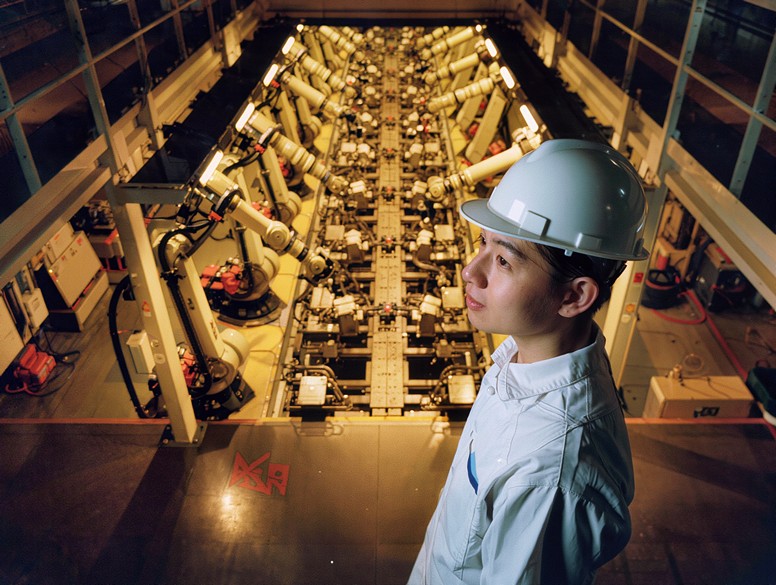
In June 2026, South Korea unveiled a sweeping industrial strategy centered on semiconductors and artificial intelligence. President Lee Jae Myung pledged over $576 billion in chip investment — with Samsung Electronics and SK Hynix committing to build four new fabrication sites each in the country's southwest region. The announcement was meant to cement Korea's global dominance in advanced memory and logic chips.

The problem: there aren't nearly enough senior executives to staff those fabs.
Across the Pacific, the same story is playing out in Arizona, Ohio, and Texas. TSMC's Phoenix campus — the largest foreign direct investment in Arizona history — has repeatedly adjusted its production timelines. Intel's sprawling Ohio megasite, initially slated for 2025 production, has pushed key milestones into late 2026 and beyond. Samsung's Taylor, Texas facility — the company's largest-ever foreign investment — is now targeting operational status this year but has acknowledged persistent hiring challenges at the senior engineering and management levels.
The semiconductor industry has a capital problem. But it also has a leadership problem — one that, according to multiple industry analysts and executive search professionals, may prove harder to solve than raising money. For companies building global supply chains around chip manufacturing, the talent bottleneck is becoming the binding constraint on growth.

The Numbers Tell a Stark Story
Gartner forecast in April 2026 that worldwide semiconductor revenue would exceed $1.3 trillion for the year, driven by AI demand triggering historic memory-chip shortages. DRAM prices surged 125% year-over-year; NAND flash rose 234%. Pricing relief is unlikely before late 2027, the firm cautioned.
Yet the workforce needed to sustain this growth is not keeping pace. A joint study by the Semiconductor Industry Association and Oxford Economics — updated in 2026 by Amtec and Metaintro — projects the industry needs to add roughly 115,000 new jobs by 2030 across the United States alone. Of those, roughly 67,000 — 58% of projected new positions — risk going unfilled at current degree-completion rates. The shortfall is concentrated among technicians, process engineers, and, most acutely, the senior leadership tier that oversees multi-billion-dollar fabrication facilities.
Cielo, a global talent advisory firm, reported in June 2026 that 80% of semiconductor executives now flag talent gaps as a top organizational risk — up from 53% in 2023. The shift reflects a dawning recognition that capital expenditure without executive bandwidth is a recipe for stalled timelines and underperforming assets.
A senior hiring manager at Henderson Executive Search, a global executive recruitment firm with a dedicated semiconductor practice, put it bluntly: "We are tracking roughly 40 qualified candidates globally for VP of Fab Operations roles. There are currently more than a dozen active searches for that exact title. The math does not work."

Korea's $576 Billion Talent Gap
South Korea's investment announcement in late June made global headlines — 800 trillion won committed to building eight new chip fabrication sites, backed by Samsung and SK Hynix, with the government providing tax incentives, infrastructure support, and faster regulatory approvals.
What received far less attention was the human dimension. Each advanced fab requires a dedicated site director, a fab operations VP, a yield enhancement director, a quality and reliability VP, and a supply chain executive — a leadership cluster of roughly 12 to 15 senior roles per facility. Eight new sites means demand for 96 to 120 such executives in Korea alone, most of whom do not currently exist in the talent pipeline.
Henderson Executive Search's industry advisor noted that the Korean initiative creates a cascading effect across global markets. "Every time a country announces a mega-investment, it pulls senior talent from the existing pool. A fab director hired in Pyeongtaek is a fab director not available for Phoenix, Columbus, or Dresden. The competition is no longer just between companies — it is between countries."
South Korea's Ministry of Trade, Industry and Energy has acknowledged the talent bottleneck, announcing plans to expand semiconductor-focused graduate programs at domestic universities and ease foreign engineer visa pathways. But even aggressive educational initiatives take three to five years to produce senior-ready talent — a timeline that does not align with the plant construction schedules already in motion.

The Phoenix Effect: How One City Became a Talent Battleground
Arizona's Maricopa County has become the densest semiconductor cluster in the continental United States, according to Stanton Chase's June 2026 white paper on semiconductor market shifts and executive leadership imperatives. TSMC's Phoenix operations alone require hundreds of engineers and dozens of senior managers. Intel already runs existing fabs in nearby Chandler. A growing ecosystem of suppliers and equipment manufacturers has set up operations in the corridor.
The result is a hyper-concentrated talent market where the same 200 to 300 senior semiconductor professionals in North America are being courted simultaneously by multiple employers. One failed executive search — a candidate who accepts a counter-offer, declines relocation, or simply chooses a competitor — can set a project timeline back by three to six months.
Henderson Executive Search's recruitment specialist observed that the Phoenix talent crunch has pushed compensation packages for fab directors above $500,000 in total annual compensation, including equity components that some mid-sized chip companies struggle to match. Smaller suppliers to the semiconductor ecosystem — tooling companies, chemical suppliers, cleanroom contractors — are being priced out of the executive talent market entirely.

The Executive That Didn't Exist Three Years Ago
A structural issue compounds the shortage: many of the roles now in highest demand barely existed five years ago. The position of "Director of AI Accelerator Operations" did not appear on any organizational chart before 2022. "VP of Advanced Packaging" was a niche role confined to a handful of OSAT companies. "Head of HBM (High Bandwidth Memory) Product Line" is now a critical position at every memory manufacturer, commanding compensation packages that exceed those of some Fortune 500 divisional CEOs.
The Henderson Executive Search talent solutions specialist flagged an uncomfortable truth for chip companies: "The semiconductor industry has done an exceptional job designing chips and building fabs. It has done a much poorer job developing the next generation of leaders who will run those fabs. Internal succession pipelines are thin or nonexistent at most companies outside of the very largest players."
That said, not every semiconductor company agrees on what a "qualified" executive looks like. Some prioritize deep technical backgrounds — PhDs in electrical engineering with 15 years of process engineering experience. Others value operational scale — candidates who have managed large workforces across multiple sites. A growing minority favors leaders with cross-functional exposure, including P&L ownership and commercial experience. The absence of a standardized executive profile creates friction even before the search begins.

The Executive Search Industry Responds
The demand surge has reshaped the executive search landscape itself. Specialized semiconductor practices — once a niche within broader industrial talent sourcing — have become standalone profit centers for firms with the right networks.
Henderson Executive Search, which has built its semiconductor executive search practice over the past five years, now runs parallel searches for multiple chip companies across the United States, Europe, and Asia. The firm's consultants report that the average time-to-fill for a VP-level semiconductor role has stretched from 90 days in 2022 to nearly 150 days in 2026 — a signal that even top-tier retained search firms are struggling to match the velocity of demand. Counter-offer rates have doubled over the same period, as incumbents receive retention packages designed to keep them from entering the market in the first place.
"We placed a site director for a Tier 1 memory manufacturer in 2023," one Henderson Executive Search consultant recalled. "The same candidate received three competing approaches in the first month of onboarding. He stayed, but the experience is now typical rather than exceptional."

The Hidden Cost: Delay Multipliers
The ripple effects of unfilled senior positions extend beyond recruitment costs. A fab without a site director cannot finalize equipment procurement decisions. Without a yield enhancement VP, process optimization stalls. Without a supply chain executive, material flow planning remains in flux.
Bloomberg reported in July 2026 that the US semiconductor labor shortage — concentrated at the skilled-worker level — was threatening to delay construction of billions of dollars in new plants. Industry executives told the publication that every month of delay at a single fabrication facility represents roughly $100 million to $200 million in lost potential revenue, based on projected output at current market pricing. When those delays compound across multiple sites and multiple countries, the economic toll becomes staggering.
To be fair, the talent shortage is not entirely the industry's fault. The semiconductor workforce pipeline has structural choke points that no single company — or country — can fix alone. University semiconductor engineering programs have not scaled to meet demand. Immigration policies in the United States and Europe create friction for the foreign-trained engineers who historically filled the gap. And the industry's boom-and-bust reputation makes it a harder sell for career-conscious graduates who prefer the perceived stability of software or financial services.

What Comes Next
The path forward is neither quick nor cheap. Companies that invest early in internal leadership development — structured rotation programs, formal mentorship tracks, defined paths from director to VP — will have an edge in the 2028-2030 timeframe. Those that rely entirely on external executive search will face escalating costs and lengthening timelines.
Henderson Executive Search's business leader predicts a segmentation of the semiconductor talent market: the top 50 semiconductor companies will compete fiercely for a finite pool of proven leaders, while smaller players will increasingly hire "builders" — executives who have scaled operations at other industries and can adapt their skills to semiconductor manufacturing. Not every semiconductor leadership role requires a PhD in electrical engineering. The question is whether the industry is ready to accept that premise.
For now, the arithmetic is brutal. $576 billion in committed investment. 115,000 jobs to fill. 67,000 at risk. And a handful of executives — perhaps 40 globally, by one search firm's count — who have actually done the job before.
The semiconductor industry knows how to build chips. What it hasn't yet figured out is how to build the leaders who build the chips — and the international competition for that talent is only accelerating.






 Global Clean Energy C-Suite Talent Shortage