
 0086-20-3156-0779
0086-20-3156-0779
0086-20-3156-0779


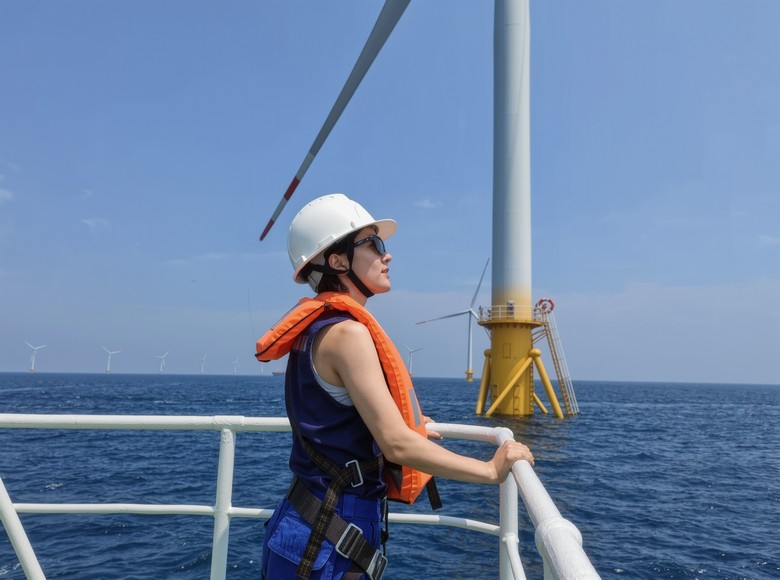
Summary: China's wind turbine exports reached a record of about 8 GW in 2025, and new overseas orders in the first four months of 2026 rose 215% year on year. Each turbine ships with a 20–30-year service contract, but most Chinese OEMs have not built the overseas service teams needed to honor those contracts. The scarce roles are country service managers, O&M directors, certified turbine technicians and regional technical trainers in Latin America, the Middle East, Central Asia and Southeast Asia.
China's wind turbine exports rose about 50% in 2025 to roughly 8 GW, a record (Chinese Wind Energy Association).
New overseas orders in January–April 2026 reached 5.236 GW, up 215% year on year (GWEC).
Chinese manufacturers supply about 59% of the world's turbines but rank only around fifth in overseas market share. Growth now depends on export markets.
More than 600,000 additional wind technicians will be needed globally by 2030 (Global Wind Workforce Outlook 2025–2030).
Subcontracting service does not remove the talent bottleneck. It moves it to the contractor, the developer and the OEM's regional technical lead.
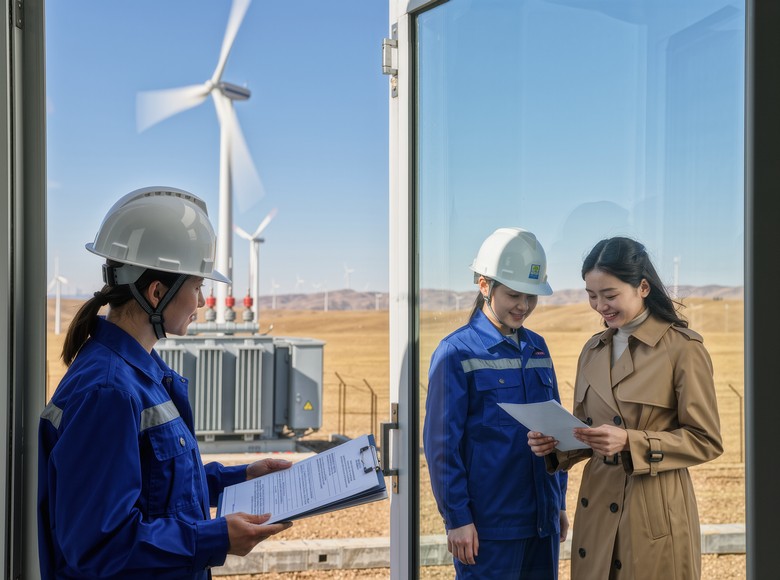
On a ridge in Argentina's wind belt, southwest of Bahía Blanca, the last nacelle of a Chinese-built fleet went up this spring. The towers stand more than 120 meters to the hub. The commissioning crew that assembled the turbines and ran their first spin flew home in April.
That was the easy part. The service agreement that shipped with the hardware, covering a quarter-century of maintenance, spare-parts guarantees, remote monitoring and on-site repair, started the same month the crew left. Twenty to thirty years of obligation now rest on a team that does not yet exist.
Why wind differs from solar: A solar panel is shipped, installed and largely left alone for two decades. A wind turbine, up to 26 MW in the largest offshore models, spins in salt air, leaks gearbox oil, throws pitch-control faults at 3 a.m., and needs someone nearby who can climb it. The sale starts the relationship rather than ending it.

| Indicator | Figure | Source |
|---|---|---|
| Wind turbine exports, 2025 | ~8 GW (8 million kW), up ~50% YoY, a record | Chinese Wind Energy Association (January 2026) |
| New overseas orders, Jan–Apr 2026 | 5.236 GW, up 215% YoY | Global Wind Energy Council |
| Chinese share of global turbine supply | ~59% | GWEC |
| Chinese rank in overseas market share | Around fifth | GWEC |
| Countries with Chinese turbines and towers | 57 | GWEC |
| Chinese OEMs building or planning overseas plants | 7 | GWEC |
| Additional wind technicians needed globally by 2030 | 600,000+ | Global Wind Workforce Outlook 2025–2030 (GWEC and GWO, December 2025) |
The domestic market is largely built out. Growth is abroad, and a large share of the technician demand sits in the markets China is now selling into: Latin America, the Middle East, Central Asia and Southeast Asia, where local pools of certified, turbine-experienced engineers are thin.
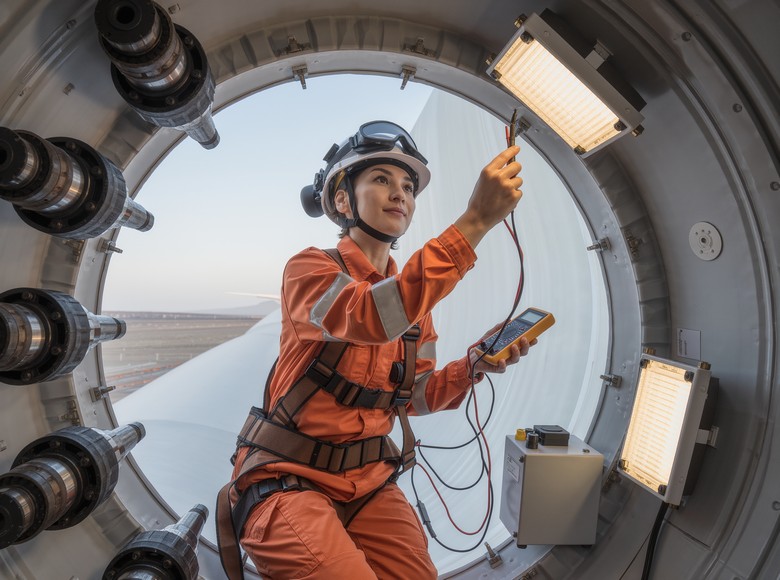
The old export model needed a sales director and a logistics coordinator. The new model needs a resident service organization in every market:
| Role | Responsibility |
|---|---|
| Country service manager | Answers to the foreign grid operator and developer |
| Certified turbine technicians | Climb, maintain and repair the fleet |
| O&M planner | Schedules maintenance and manages availability |
| Spare-parts supply-chain lead | Keeps parts in country to meet contract guarantees |
| Training lead | Keeps certifications current as crews turn over |
"They can build a factory in eighteen months," said a supply-chain partner at a European developer that has bought from three Chinese OEMs. "They cannot build a service bench in eighteen months. It takes five years to grow one, and they started counting late."

The problem rarely appears as an engineer shortage. It appears as a delay:
A pitch-system fault that a European O&M crew would clear in a day takes three weeks, because the only trained technician for that platform is two flights away.
The developer then writes penalties into the next service contract.
"In the first year you don't feel it," a Dubai-based asset manager said. "In year three, when the first real failures show up, you feel every single person you didn't hire."
Western manufacturers spent decades building local service arms, so their teams were already in place. Chinese firms are compressing that process into a few years, across dozens of countries at once, often while pricing low enough to leave little margin for a large field team.

The argument: Chinese OEMs often raise this with Henderson Executive. Many Western developers already use independent contractors or in-house teams.
Why it does not hold: Subcontracting moves the bottleneck rather than removing it.
The contractor still needs certified technicians for a platform most of its staff have never worked on.
The developer still needs a service manager who can hold the OEM accountable and read a fault log.
The OEM still needs a regional technical lead who can train, troubleshoot and escalate to China.
The argument: The shortage is a training problem.
Why it is only part of the answer: The Global Wind Workforce Outlook states that training supply is not keeping pace. And a certificate is worth less than a technician who will stay at a remote, windswept site for three years.
Start by defining the job before hiring for it. Many exporters begin with a vague brief for an "overseas service manager" expected to be part commercial lead, part engineer and part expatriate fixer, and end up with a hire who fits none of the three.
Henderson Executive sees the companies getting this right doing three things at once:
Hire locally in each target market. Seed every new country with people who understand the local grid, labor code and developer expectations.
Keep a lean expatriate core. A few senior engineers carry the China-to-field playbook and can set up a site from zero.
Build a career ladder, not one-off hires. Map the service organization so the person who commissions a wind farm stays to run it.
| Party | Implication |
|---|---|
| Chinese wind OEMs expanding abroad | A credible service team is now a competitive factor. Developers comparing two turbine bids weigh which vendor can keep a farm running in year twelve |
| Foreign operators and Western developers working with Chinese suppliers | The shortage is both leverage and risk: the talent they help install becomes a capability they depend on |

Back on the ridge outside Bahía Blanca, the turbines are turning. The developer has a service contract with 24 years left on it and a thinner team than the contract assumes.
The wind export story is usually told as a manufacturing story about steel, blades and shipping schedules. It is also a talent story. Hardware travels easily; the capability to operate it for 25 years does not. After the first major failure, buyers stop choosing on price and start asking who will be on site at 3 a.m. in year eleven.
For exporters booking record overseas orders, the practical step is to budget the service organization before the sales team closes the deal. Henderson Executive works on these mandates for Chinese manufacturers going global and for their partners, focusing on resident service leaders, country O&M directors and technical trainers in renewable energy and industrial-equipment exports, where the candidate pool is small, the language bar is high and the hiring window is short.
China's wind turbine exports rose about 50% in 2025 to roughly 8 GW, a record, according to the Chinese Wind Energy Association. New overseas orders in January–April 2026 reached 5.236 GW, up 215% year on year, according to GWEC.
Wind turbines are sold with 20–30-year service agreements covering maintenance, spare parts, remote monitoring and on-site repair. Honoring those contracts requires resident service staff in each market, which most Chinese OEMs have not yet built.
Country service managers, O&M directors and planners, certified turbine technicians, spare-parts supply-chain leads and regional technical trainers, especially in Latin America, the Middle East, Central Asia and Southeast Asia.
The Global Wind Workforce Outlook 2025–2030, published by GWEC and the Global Wind Organisation, forecasts that more than 600,000 additional wind technicians will be needed globally by 2030.
Not fully. Subcontracting moves the bottleneck to the contractor, which still needs technicians certified on the platform, while developers still need service managers and OEMs still need regional technical leads.
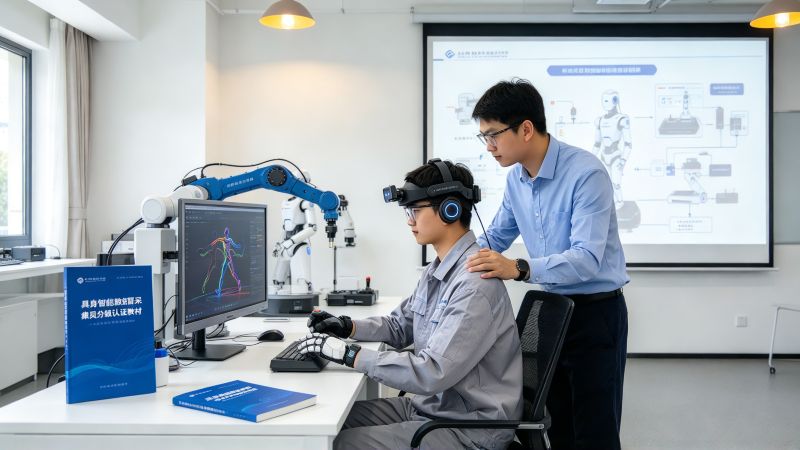




 Robot Data Collection Is Now an Official Job in China. Postings Rose 769% in a Year