
 0086-20-3156-0779
0086-20-3156-0779
0086-20-3156-0779


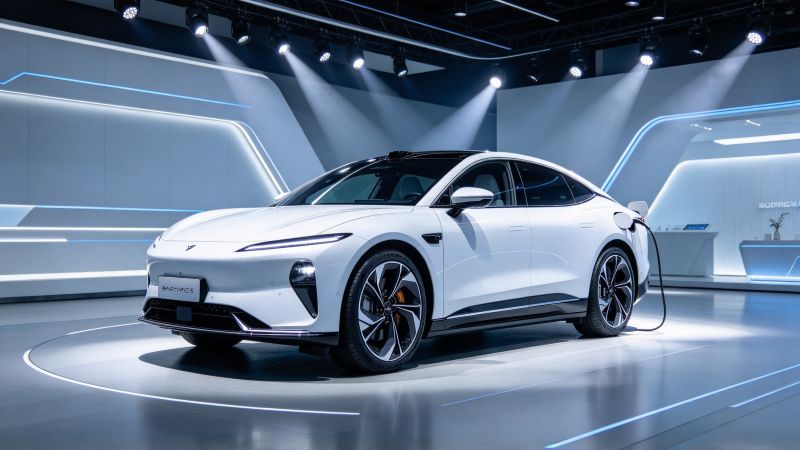
On 28 May 2026, at BYD's intelligent-strategy launch in Shenzhen, chairman Wang Chuanfu did not open with sales figures. He took a chip out of his pocket. The Xuanji A3 is China's first 4nm automotive-grade autonomous-driving chip: 700 TOPS on a single die, more than 2,100 TOPS across three, native L3 and L4 support, and unit-power consumption 20% below comparable parts. His line travelled further than the launch itself — the first half of electrification was about batteries, the second half of intelligence is about chips.
The chip was not improvised. BYD's chip work began in 2002 with an in-house IC design team, twenty-four years before the launch, and now rests on over 7,000 chip engineers, more than 100 billion yuan of cumulative investment, four R&D bases and five wafer fabs. Behind it sits a software organisation: an assisted-driving fleet above 3.15 million vehicles generating 200 million kilometres of data a day, and more than 5,000 engineers. Henderson Executive Search's automotive consultants note the hiring effect lags the launch, but the direction is clear. The profile shifts from single-discipline to composite — chip architecture, automotive safety standards and the autonomous-driving stack in one person. That talent combination barely existed five years ago and is now the most expensive in automotive engineering.
Down-market movement is faster than the chip story. In September 2026, SAIC's MG 07 carried an 800V platform and 5C charging into the mainstream family segment at a promotional price in the 100,000-yuan band. XPeng's MONA M03 offers 800V charging between 119,800 and 155,800 yuan with city NOA on the top trim; Dongfeng's Nammi 06 launched on 25 June at 99,900 yuan, standardising city navigation assist across the range; Changan's Qiyuan A06 pairs an 800V silicon-carbide platform with 6C charging at 119,900 yuan. Three years ago these specifications belonged to cars above 200,000 yuan.
Association data put L2-and-above assistance in more than 87% of new energy passenger vehicles in the first four months of 2026, with 70% of new cars carrying combined driving assistance and over 30% shipping navigation assist. The technology route moved from high-definition maps to map-free and end-to-end models, cutting the marginal cost of scenario coverage — the economics that make the down-market push possible. The push carries a supply chain with it: power semiconductors and connectors, thermal management and battery materials, compute chips and sensing hardware, all competing on specification rather than price.
The shift shows in the briefs. Henderson Executive Search's industry consultants have watched powertrain assignments shrink as vehicle electronics, driving-algorithm and vehicle-software briefs rise — and grow more precise, now specifying whether a candidate has delivered high-speed or city NOA to mass production. The more precise the brief, the fewer people who match it.
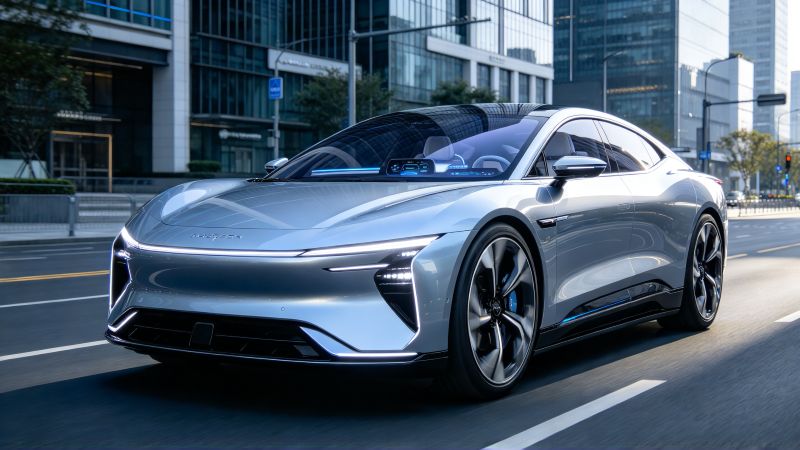
The other line of competition is regulatory. In December 2025, MIIT issued China's first L3 conditional autonomous-driving approvals, with Changan Deepal SL03 in Chongqing and BAIC Arcfox Alpha S6 in Beijing beginning pilots; in July 2026 the pilot expanded to six cities. That month a mandatory national standard for autonomous driving system safety was released, effective in 2027; with the earlier standard for combined driving assistance, the two draw a clean line between a human driving with assistance and the system performing the dynamic driving task.
The watershed came in August. A draft amendment to the Road Traffic Safety Law was submitted for first reading with a dedicated chapter on autonomous vehicles: where a violation occurs with the automated function engaged, the manufacturer or importer is dealt with. Autonomous driving entered Chinese law, and the long-blurred liability boundary acquired statutory language. Pilot data followed: Changan Deepal reports 125,600 km of normal operation on Chongqing expressways by 30 June with no violations, and Arcfox reports more than 110,000 km on designated Beijing highway sections with zero violations and zero accidents.
Regulatory change rewrites the hiring list. Functional-safety engineers must own ISO 26262 and Safety Case documentation; simulation and validation engineers build scenario libraries covering long-tail cases, where industry practice runs roughly 99.9% simulation, 0.09% closed course and 0.01% open road; takeover strategy must answer what happens when a system requests intervention from a driver whose attention has gone offline. Henderson Executive Search's recruitment specialists observe that this compliance bench sat at the edge of headcount plans for years and is now a node on the project plan. Regulation has moved competition from counting activated cities to proving safety capability.
Follow the stack down and the gaps cluster in four roles. Perception and end-to-end algorithm engineering moves fastest — multi-sensor fusion, BEV and occupancy networks, end-to-end models — and production experience is the screening criterion. Many of the sector's senior algorithm leaders came out of Baidu's autonomous-driving unit, which the industry calls its academy; even that pool leaks, as when XPeng's team lost core members en masse to Nvidia.
Chassis domain control and steer-by-wire link perception to execution, held to ISO 26262 standards and demanding chassis mechanics as well as control software; it is a real transition route for traditional chassis engineers, and hardware engineers who can code command a visible premium. Vehicle OS and middleware engineering spans Linux, QNX and Android Automotive with SOA, DDS and AUTOSAR — where the scarcity is production exposure, since many engineers can write low-level software but far fewer have shipped it into a production vehicle.
The fourth is the compliance bench — functional safety, simulation validation, takeover strategy and data compliance. It is the smallest pool of the four, because these were not dedicated jobs three years ago; most people now filling them were converted from neighbouring disciplines inside the same company — a compliance pool built by retraining rather than hiring. A production milestone can stall on one vacant seat here as easily as on a missing algorithm lead.
| Role | Core capability | Where candidates come from | Why the search is hard |
| Perception & end-to-end algorithm | Multi-sensor fusion, BEV/occupancy networks, end-to-end models, on-vehicle calibration | OEM ADAS teams, autonomous-driving tech firms, research institutes | Senior engineers with production delivery sit in a handful of firms |
| Chassis domain control & steer-by-wire | Brake-by-wire, steer-by-wire, chassis domain controller, ISO 26262 | Chassis engineers in transition, Tier-1 chassis divisions | Mechanics-plus-software profiles are scarce; transition takes time |
| Vehicle OS & middleware | Linux/QNX/Android Automotive, SOA, DDS, AUTOSAR | Tier-1 software teams, consumer-electronics platform teams, OEM E/E departments | Production vehicle software delivery is rare; cross-industry entry is hard |
| Functional safety & simulation validation | ISO 26262, Safety Case, scenario libraries, simulation closed loop | Tier-1 safety teams, third-party test houses, OEM validation departments | Newly regulated function; thin existing pool, mostly internal transfers |
The other side of the intelligence race is where traditional suppliers now sit. In December 2025, ZF agreed to sell its advanced driver assistance business to Harman at an enterprise value of about 1.5 billion euros, and turned to a partnership with Chinese chipmaker Horizon Robotics whose coPILOT system is due for mass production in August 2026. Analysts read it as redirecting investment rather than exiting: covering every technical link in house is giving way to shorter cycles and locally sourced cooperation. ZF's Asia-Pacific sales fell to 3.841 billion euros in the first half as global headcount dropped by about 3,500.
Where the talent went matters most. Public reporting through the first half of 2026 describes several influential foreign Tier-1 suppliers adjusting their intelligent-driving and chassis teams in the same window, with released engineers moving mainly to BYD, Huawei and Momenta, sometimes as whole teams. Team-level relocation rather than individual job-hopping has changed talent density at domestic leaders, and BYD's intelligent-driving institute added engineers at scale while Huawei's Qiankun hiring concentrated on end-to-end models, VLA architecture and automotive AI chips. Henderson Executive Search's senior consultants call the flow double-edged: these engineers onboard fast and bring process discipline, but they weigh project ownership and technical direction heavily, and pay alone rarely closes the conversation.
Industry talent reports put the supply-demand ratio for intelligent-driving system engineers at roughly 1:16, among the tightest of any technical role, with close to 39% of the pool holding a master's or doctorate. Pay tracks the gap. Salary research reports show perception algorithm engineers with three to five years at 50,000 to 80,000 yuan a month, planning-and-control at 60,000 to 90,000, chassis domain control at 35,000 to 60,000 and vehicle OS at 40,000 to 70,000, all on a 15-month basis; chief-engineer roles commonly run 800,000 to 1.3 million yuan a year.
Timeline matters more than headline pay. Self-managed hiring for chief-engineer roles often runs beyond six months, and Henderson Executive Search's talent consultants put a retained search at three to six months — short in length but front-loaded in difficulty, since most qualified candidates are employed and reachable only through technical networks. The talent clusters in Shenzhen, Shanghai, Beijing, Guangzhou and Hangzhou, where the Greater Bay Area concentrates OEMs, Tier-1 suppliers and autonomous-driving firms within a short commute radius.
The costliest mistake is staffing new work with the old shape: employers keep expanding traditional vehicle development and hardware-adaptation headcount, then miss production milestones and rebuild the core algorithm group at a higher cost than hiring earlier would have taken. The underlying tension is lead time. A model takes about two years from platform approval to production, a senior hire about six months — so draw the org chart at platform approval and start key searches a year out, with regulatory and compliance milestones folded into the plan. Export growth adds a second line: certification, UN ECE regulation and data compliance roles, modest in number but able to hold up a market entry. Henderson Executive Search runs automotive and intelligent-connected vehicle searches from Guangzhou, inside the Greater Bay Area's OEM and ADAS supply chain, and sees the same pattern each cycle — the firms that sequence recruitment ahead of the model calendar lose less time at the production node.
Q: Why is it so hard to hire intelligent-driving algorithm engineers in China?
A: Three factors compound. The stack moves fast; employers screen explicitly for production delivery, and those candidates cluster in a few leading teams that are themselves losing people; and they are employed, well paid and not looking. Henderson Executive Search finds the difficulty lies not in résumé volume but in reaching senior talent directly.
Q: What does the new L3 regulation change for employers?
A: It creates roles that barely existed as dedicated jobs: functional safety under ISO 26262 and Safety Case, simulation validation with long-tail scenario libraries, takeover strategy, and data compliance. Most employers fill them by converting people internally, and anyone combining regulatory literacy with engineering depth is scarce.
Q: Can traditional chassis engineers move into chassis domain control and steer-by-wire?
A: Yes — it is a clear transition window. Brake-by-wire, steer-by-wire and domain control need solid chassis mechanics plus control software and ISO 26262. Hardware engineers who can code command a premium, and employers should accept the combined profile rather than demanding top-tier strength on both sides.
Q: When should an automaker start a search for intelligent-driving roles?
A: Twelve months ahead. A model takes about two years from platform approval to production, a senior hire about six months including notice. Fix the key algorithm, chassis domain control and vehicle software roles at platform approval, then fold in the regulatory nodes — safety certification and validation take longer to develop.
Q: How should a company choose an automotive headhunter for smart-car roles in China?
A: Three tests. Has the firm completed production-role searches in the same technical direction, and does it understand the boundaries between perception, chassis domain control, vehicle software and functional safety? Can it map where the target candidates sit rather than forward a résumé stack? Will it stay engaged three months after the start date? Henderson Executive Search runs automotive and intelligent-connected vehicle searches from Guangzhou, inside the Greater Bay Area supply chain.





 China R&D Tops OECD Average: Engineer Recruitment Moves On Campus | Henderson Headhunter