
 0086-20-3156-0779
0086-20-3156-0779
0086-20-3156-0779


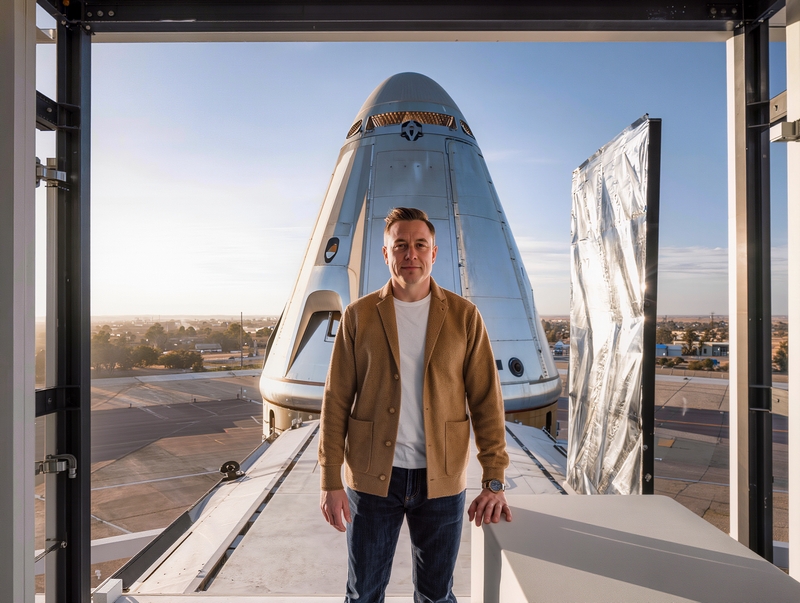

Space Exploration Technologies Corp., the closely held rocket-and-satellite juggernaut controlled by Elon Musk, filed paperwork with securities regulators Tuesday for an initial public offering that promises to be the largest in history, eclipsing Saudi Aramco's record $29 billion listing nearly seven years ago.
The company, known universally as SpaceX, submitted its S-1 to the Securities and Exchange Commission on May 20 for a listing on the Nasdaq under the ticker SPCX. The offering aims to raise between 75 billion and 80 billion at a valuation of approximately $1.75 trillion, according to people familiar with the matter. Shares are expected to begin trading on or around June 12.
The deal represents an extraordinary moment for global capital markets. The valuation would instantly rank SpaceX among the most valuable publicly traded companies on the planet, rivaling tech behemoths such as Apple, Microsoft and Nvidia. Post-IPO, some analysts project the company's market capitalization could surge past $2 trillion.

A Colossus Built on Rockets and Subscriptions
SpaceX's ascent from a scrappy startup founded in 2002 to a $1.75 trillion enterprise reflects a dramatic transformation in its business model. No longer merely a launch provider, the company has evolved into a vertically integrated space-and-telecommunications powerhouse whose primary revenue engine is now Starlink, its constellation of thousands of low-Earth-orbit broadband satellites.
Starlink has amassed 8.5 million subscribers globally and is on pace to hit 10 million by the time the IPO prices, according to disclosures in the S-1 filing. The division has emerged as the company's principal growth driver, generating the majority of SpaceX's revenue and achieving profitability on a standalone basis—a critical detail for investors scrutinizing the company's overall financial picture.
The numbers in the filing paint a portrait of a company scaling at a ferocious pace. SpaceX generated 18.7 billion in revenue in 2025, a 33% increase from 14 billion the prior year. But the rapid expansion came at a cost: the company swung to a net loss of 4.9 billion from a 791 million profit in 2024, a reversal the filing attributes to heavy investment in Starlink's manufacturing capacity, launch infrastructure, and the integration of xAI, the artificial-intelligence startup acquired by SpaceX in February.
In the first quarter of 2026, revenue reached 4.7 billion. The company's traditional space segment—government and commercial launch contracts—generated 619 million but posted an operating loss of $662 million, underscoring how SpaceX's financial fortunes now hinge on Starlink's subscription base. A partner at Henderson Executive Search who advises aerospace companies noted that the IPO will intensify talent competition in an industry where specialized engineers are already scarce. "SpaceX is setting a new benchmark for compensation in the aerospace sector, and every other company in the supply chain has to respond," the partner said.

The 28.5 Trillion-Dollar Opportunity
In its S-1 filing, SpaceX frames its addressable market in terms that are characteristically audacious. The company estimates that the space-based artificial-intelligence infrastructure market could be worth as much as $28.5 trillion, encompassing everything from orbital data centers to satellite-to-satellite AI processing networks.
This argument sits at the heart of SpaceX's growth narrative. The acquisition of xAI—which gave SpaceX ownership of the Grok large-language model and a team of AI researchers—was driven by Mr. Musk's conviction that the next frontier of artificial intelligence will be built in space, where satellites can process data without the latency constraints and energy limitations of terrestrial data centers.
SpaceX now controls approximately 65% of all active satellites in orbit, roughly 7,600 spacecraft. The company operates its own launch vehicles, satellite-manufacturing facilities, and global ground-network infrastructure—a vertically integrated model that competitors have struggled to replicate.
SpaceX's ambition extends well beyond its current footprint. The company has outlined a plan to achieve a launch cadence of 10,000 missions per year within five years, a roughly 50-fold increase over today's global launch activity that would require a massive hiring ramp across aerospace engineering, artificial intelligence, advanced manufacturing and logistics.
"SpaceX is creating a gravitational pull on talent unlike anything the aerospace industry has ever seen," said a partner at Henderson Executive Search, a firm specializing in space and technology. "Every engineering graduate with a background in propulsion, avionics, or machine learning is being courted by SpaceX and by the hundreds of startups trying to keep pace."

Control, Capital and the Musk Premium
For all the financial detail in the S-1 filing, one aspect of the offering structure stands out: the degree of control retained by Mr. Musk. The billionaire entrepreneur, who also serves as chief executive of Tesla Inc. and owns the social-media platform X, will hold a class of supervoting shares that gives him decisive authority over strategic direction, board composition and major corporate actions.
This governance structure—increasingly common among high-profile tech IPOs but still notable at SpaceX's scale—means that public-market investors will have limited influence over management. The arrangement is likely to be accepted given Mr. Musk's track record, but it introduces a singular point of dependency that governance watchdogs have flagged as a risk. Henderson Executive Search's space practice noted that the governance structure may also affect how the company attracts and retains top executive talent, as candidates weigh the limited influence of public shareholders against SpaceX's compensation packages.
The capital being raised will be deployed aggressively. SpaceX has indicated that proceeds will fund the expansion of Starlink's constellation, the development of the Starship launch system—the largest rocket ever built—and the build-out of space-based AI computing infrastructure.
A Ripple Effect Across Industries
The IPO is expected to unlock a wave of liquidity for early investors and employees, creating a new cadre of space-industry millionaires and billionaires likely to reinvest in the broader ecosystem. Henderson Executive Search has seen inquiries from aerospace startups seeking to recruit from the newly liquid pool of SpaceX alumni. "The IPO creates a talent redistribution event," said a Henderson partner focused on the space sector. "Employees who have been locked into equity for years will suddenly have wealth diversification options, and many will choose to join—or start—the next generation of space companies."
The offering also signals a maturation of the commercial space sector. Once dismissed as a speculative niche, the industry now commands the attention of the world's largest asset managers, sovereign wealth funds and pension funds. The sheer scale of the offering—at least two and a half times larger than any previous IPO—will force global capital markets to develop new infrastructure for companies straddling aerospace, telecommunications and artificial intelligence.
For the aerospace and defense industry, SpaceX's dominance presents both an opportunity and a challenge. The company's hiring ambitions are straining a talent pipeline designed for an era of far more modest launch rates. Universities are expanding aerospace-engineering programs, and rival companies from Blue Origin to Rocket Lab to United Launch Alliance are being forced to offer increasingly generous compensation to retain technical talent.
"The SpaceX IPO is a generational event for capital markets and for the space industry," the Henderson partner said. "It validates an entire asset class and will accelerate the flow of capital, talent and attention into a sector that has operated at the margins of the global economy. That is now changing—permanently."
The roadshow is expected to begin in late May, with executives presenting to institutional investors in New York, London and the Middle East. The company has enlisted roughly a dozen banks to underwrite the deal, led by Goldman Sachs Group Inc. and Morgan Stanley.
If the IPO prices at the targeted valuation, Mr. Musk's personal stake—he is the company's largest shareholder—would be worth approximately $700 billion on paper, though the supervoting means that figure is largely theoretical for liquidity purposes.
The clock is ticking toward June 12. For SpaceX, Elon Musk, and an industry watching its flagship company cross into public markets, the countdown has begun.





 AMD's Su Sees Chip Boom Running Faster, Longer Than Expected