
 0086-20-3156-0779
0086-20-3156-0779
0086-20-3156-0779


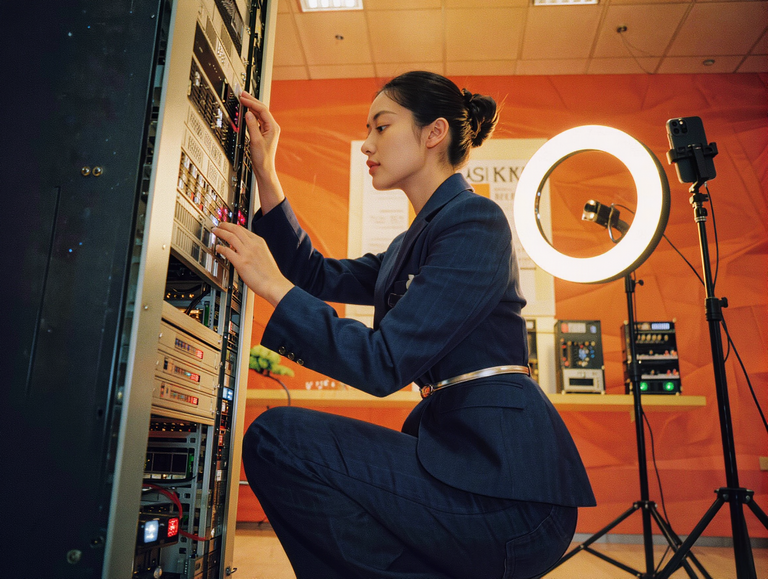

Chinese cross-border sellers are rushing to adopt AI e-commerce platforms like StoreClaw, which promises 50% efficiency gains for $480 per year. The shift is transforming hiring patterns across Shenzhen's cross-border e-commerce ecosystem — driving demand for tech-savvy operations managers while making traditional multi-tool workflows obsolete. Henderson Executive Search analysts track how AI automation is rewriting recruitment strategies for one of China's fastest-growing export sectors.
The Twice-a-Day E-Commerce Revolution
On any given morning, a mid-sized cross-border e-commerce seller in Shenzhen opens six browser tabs: Shopify for the independent storefront, Amazon Seller Central for the marketplace listings, TikTok Shop for social commerce, and three separate tools for SEO optimization, customer service translation, and ad campaign analytics. By afternoon, the team has manually copied product data between platforms, adjusted pricing across channels, and checked whether a competitor just dropped their LED light price by 12%. This fragmented workflow — involving an average of 3.5 point-solutions per merchant, according to industry data — has long defined the operational reality of China's cross-border e-commerce sector.
That reality is now changing. StoreClaw, a Shenzhen-based AI startup founded in early 2026, recently topped Product Hunt's daily and weekly charts with a platform that promises to consolidate this chaos into a single "AI brain." As reported by Chinese tech publication 36Kr, the platform connects directly to Amazon, Shopify, TikTok Shop, and social media APIs, allowing merchants to automate product listing optimization, ad analysis, inventory monitoring, and cross-platform content distribution from one interface.
The pitch resonates. One of StoreClaw's clients, an LED lighting brand called Emitever, reported that after integrating the platform, their product preparation cycle shrank to under two hours, listing conversion rates climbed from below 10% to 14%, and monthly content production costs dropped from 20,000 to 5,000. Another client, a small fragrance brand called INCENZO, automated 85% of its multi-channel operations — freeing up a three-person team that had been spending 18 hours per week on manual social media distribution.

Inside the Numbers: What $480 Buys
The economics are stark. A basic cross-border operations specialist in China costs between 150,000 and 200,000 RMB ( 21,000– 28,000) per year in total compensation, according to recruitment data from leading job platforms. StoreClaw's Max subscription costs $480 annually — roughly 3,200 RMB. The company claims that for mature teams, the platform delivers a direct 50% efficiency improvement.
This ratio — a $480 tool producing efficiency gains worth tens of thousands of dollars in labor — is forcing difficult questions inside cross-border e-commerce companies. "The cost equation has fundamentally changed," said a Shenzhen-based partner at Henderson Executive Search who specializes in e-commerce talent. "Companies used to hire three operations staff and hope they could handle the workload. Now they're asking: do we need three people managing ten tools, or two people managing one AI platform?"
The impact extends beyond simple headcount reduction. Henderson's analysis shows that the role itself is being redefined. "Six months ago, the job posting for a cross-border operations manager focused on platform familiarity — 'must know Amazon backend, Shopify, TikTok Shop' — that was the baseline," the partner noted. "Today, clients are asking for candidates who understand how to configure and supervise AI workflows, not just execute manual tasks. The skill set is shifting from platform operation to AI workflow management."

The New Talent Profile: From Operator to Supervisor
The shift creates both opportunities and mismatches in the talent market. A partner at Henderson Executive Search's Shenzhen office who tracks cross-border e-commerce hiring noted that the demand for pure operations staff — employees whose primary job is manually copying product data between platforms — is already declining. "We're seeing a 20–25% reduction in requisitions for entry-level operations roles compared to this time last year," he said. "The companies that are hiring for these roles are primarily smaller sellers who haven't adopted AI tools yet."
Meanwhile, a new category of role is emerging: the AI-assisted e-commerce operations supervisor. These positions require a hybrid skill set — familiarity with Amazon's A9 algorithm, Shopify's ecosystem, and TikTok Shop's content-driven sales model, plus the ability to configure and monitor AI agents that execute tasks across all three platforms simultaneously. "The candidate who can read a conversion dashboard and also know which prompts to adjust in their AI tool to improve a listing's visibility — that person is suddenly worth a premium," the partner said.
Salaries for these hybrid roles have already adjusted. According to Henderson Executive Search's internal compensation tracking for cross-border e-commerce positions, a senior operations supervisor with AI workflow experience now commands 250,000–350,000 RMB ( 35,000– 49,000) in Shenzhen — a 40% premium over traditional operations managers with equivalent years of experience. "The market is pricing in a scarcity that will take at least 12–18 months to correct," the Henderson partner noted. "The supply of candidates who genuinely understand both cross-border e-commerce and AI automation is extraordinarily thin."

Fragmentation as a Defense: Why the Mega-Platforms Can't Solve This
One feature of StoreClaw's pitch is worth examining closely: its CEO Steven Zhou has explicitly positioned the company as a neutral layer between competing ecosystems. "Connecting Amazon, Shopify, and TikTok Shop — platforms that are fundamentally competitive with each other — is a dirty, tedious job that the big players can't easily do due to ecosystem barriers," Zhou told 36Kr.
This fragmentation creates a structural hiring challenge. When a merchant's operations are tied to a single platform-native AI tool (Shopify Sidekick or Amazon Seller Assistant), the required talent profile is simpler: platform-specific knowledge plus basic AI literacy. But the reality for most Chinese cross-border sellers is multi-platform — a "Shopify independent store + Amazon + TikTok Shop" trinity that has become standard for mid-to-large exporters. A Henderson Executive Search analysis of job postings across Shenzhen's cross-border e-commerce cluster found that 68% of operations roles now require experience with at least two distinct sales channels, up from 42% two years ago.
"The multi-platform reality means the AI tools that win will be the ones that operate across ecosystems," the Henderson partner said. "And that, in turn, means the talent market will bifurcate: one track for sellers who go all-in on a single platform's native AI, and another, larger track for those who need cross-platform AI supervisors. Both tracks pay well — but the cross-platform talent will command the premium for the foreseeable future."

The Structural Shift Beneath the Hype
StoreClaw's rapid rise — from a 2026 startup to Product Hunt's top-ranked product within months — is not an isolated phenomenon. It reflects a structural shift in how China's cross-border e-commerce sector approaches operational efficiency. Total cross-border e-commerce export volume reached 2.63 trillion RMB in 2025, according to Chinese customs data, with an estimated 15 million SMEs participating in the ecosystem. Even a modest improvement in operational efficiency across that base represents enormous value — and enormous change in how those SMEs staff their operations.
"The cross-border e-commerce sector has always been talent-constrained at the senior level, but abundant at the entry level," said the Henderson partner. "AI tools are reversing that equation. They compress or eliminate entry-level manual work, but they create demand for a new kind of senior operator who can manage both the business logic and the AI infrastructure. The companies that figure this out first will have a structural advantage."
That said, the transition won't be smooth. Henderson's conversations with cross-border e-commerce HR leaders reveal a recurring concern: retraining. "Companies are realizing they can't simply fire their entry-level staff and hire AI supervisors — there aren't enough supervisors to hire," one HR director told Henderson. "So they're stuck: they want the efficiency gains, but they need time to upskill their existing teams. The adjustment period will take at least two hiring cycles."
Here's the thing — this adjustment period is itself creating work for search firms. Henderson Executive Search has received multiple briefs from Shenzhen-based cross-border e-commerce companies specifically asking for candidates who can "bridge" traditional operations with AI workflows — people who understand not just the tools, but how to keep a team motivated while their jobs are being automated. The kicker? Those bridging candidates are even harder to find than the pure AI supervisors, precisely because they need both technical credibility and people-management experience.

A New Kind of Efficiency — and a New Kind of Talent Gap
StoreClaw founder Steven Zhou calculated the math bluntly: a $480 annual subscription versus a 150,000 RMB annual salary. On paper, the tool wins every time. But in practice, the tool creates value only when supervised by the right operator — and those operators are currently the scarcest resource in Shenzhen's cross-border e-commerce talent market.
As Henderson Executive Search observes the evolution, a pattern is emerging: the companies that adopt AI tools fastest aren't necessarily the ones with the best technology — they're the ones with the best talent strategy. They invest in retraining before they invest in firing. They promote hybrid roles before pure automation roles. And they use search firms not just to find candidates, but to understand how their organizational structure needs to change.
The $480 tool is a bargain. The talent to run it properly? That's going to cost a lot more.





 The Chip That Changes the Game